

August 30, 2026
Sam Popham: The Hermit of Dambulla Who Grew a Forest Back

Locals in Dambulla called him Gasmahaththi, the man of the trees. Others knew him as the hermit of Dambulla. Sam Popham didn’t arrive in Sri Lanka to earn either name. He arrived as a naval officer, stayed on as a tea planter, and only found his real life’s work by accident, on seven and a half acres of scrub jungle he’d originally bought to grow mangoes. Sam Popham’s Arboretum is what came of that accident: fifty years of one man’s patience, and a dry-zone forest grown back where scrub jungle used to be.
A Naval Officer, a Schoolmaster, a Tea Planter
Francis Home “Sam” Popham was born in Portsmouth in 1923, the son of a clergyman, and grew up amid the fields and hedgerows of Boxgrove in West Sussex, where his father served as a parish priest after some years as a chaplain at Eton. Popham himself went on to Eton, then to Magdalene College, Cambridge, to read history. The war interrupted his degree in 1941, when he joined the Royal Naval Volunteer Reserve and served in a minesweeper flotilla clearing the way for the D-Day landings.
It was that same war that first brought him to Ceylon, aboard a Royal Navy corvette harboured at Trincomalee. Travelling through Dambulla during the war, he found himself drawn to the forest vegetation lining the road, though it would be years before that memory turned into anything more than a memory. After demobilisation he taught for a time in Egypt and Sussex, then returned to Ceylon in 1952 and spent well over a decade as a tea planter, a conventional enough path for an Englishman of his background and era.
A Mango Plantation That Never Happened
In 1963, still travelling the roads around Dambulla, Popham bought a patch of scrub jungle, thorny, low, tangled growth sitting on abandoned chena land that had once been cleared and burned for shifting cultivation. His plan, according to his long-time colleague Jayantha Amerasinghe, was straightforward: clear the scrub and plant a mango orchard. It was only after the clearing was done, and before a single mango seedling went into the ground, that Popham changed course entirely. What he’d exposed by clearing the weeds wasn’t empty ground waiting for a crop. It was a forest already trying to come back on its own, given the smallest opening.
He never planted the mangoes. He gave up tea planting altogether not long after, taking on a role as Principal Field Officer for the Smithsonian Institution’s Flora of Ceylon project, cataloguing the island’s plant life in detail, and turning his attention full-time to the land he’d almost farmed instead of studied.
Sam Popham’s Arboretum: A Method Built on Doing Almost Nothing
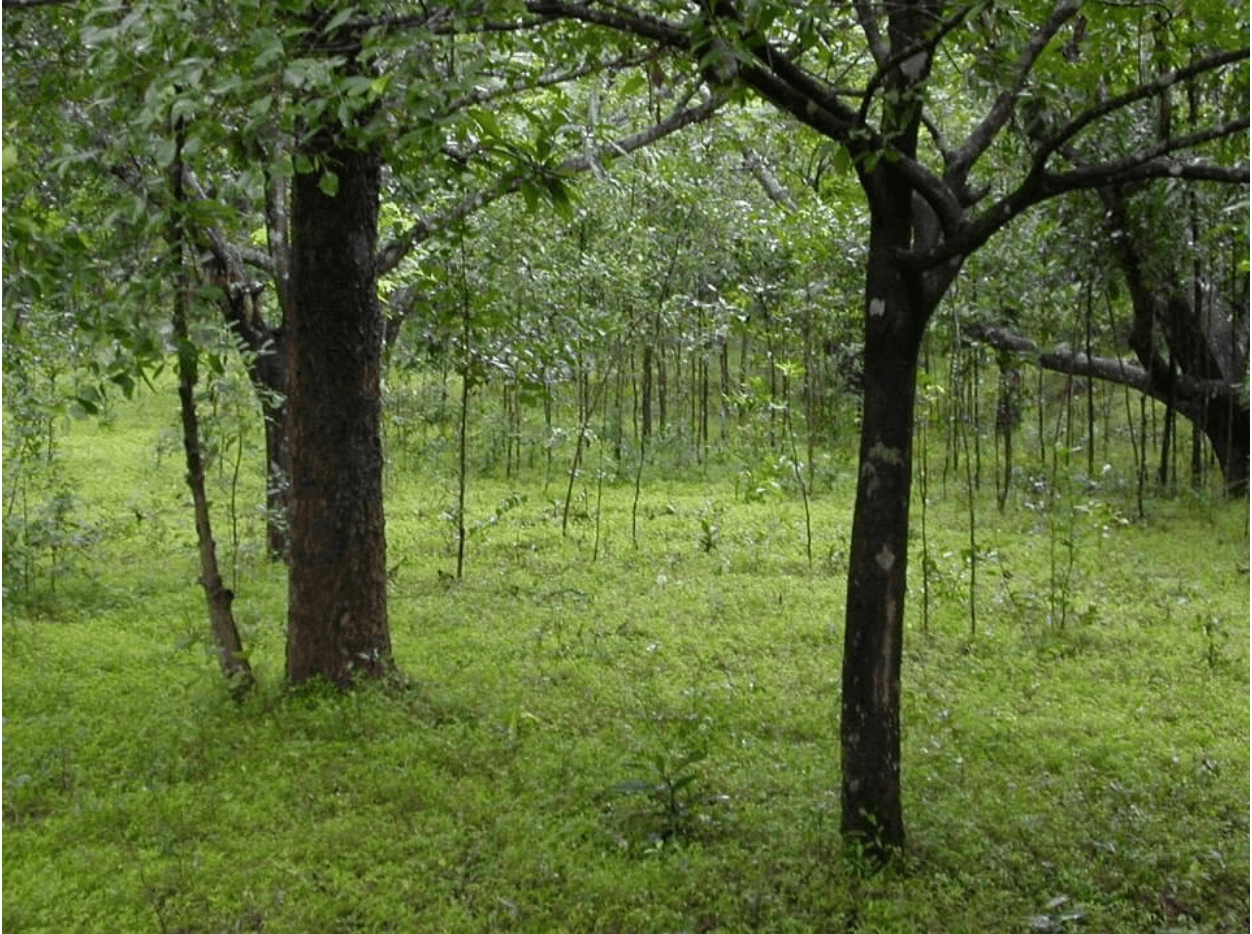
What Popham did next became known, eventually, as the Popham principle, plant nothing, water nothing, let nature have its way. Rather than clearing the scrub entirely and replanting from scratch, he removed only the fast-growing weedy shrubs which were choking everything else out, and left whatever native seedlings were already dormant in the soil to grow at their own pace. Stem-pruning and crown-lifting helped young trees along as they established themselves; thinning came only once a stand was strong enough to stand on its own.
He worked in stages, dividing the land into twelve blocks and clearing them at different times, taking on only as much as he and his workers could actually protect from wind, drought, and flood. What would now be called rewilding was, in the 1960s, an outlandish idea: that the most useful thing a person could do for a damaged forest was mostly get out of its way.
The Hermit of Dambulla
Popham worked largely alone for years, a stubborn, self-taught Englishman doing agricultural heresy in the middle of Sri Lanka’s dry zone, which is likely how he earned both of his local nicknames. He won Sri Lanka’s Lanka Conservation Award in 1992, and drew praise from scientists abroad, including the British botanist and broadcaster David Bellamy. A friend, writing his obituary years later, described him as stubborn, fearless, and provocative, an original in every sense.
His own quarters at the site, designed by his friend, the architect Geoffrey Bawa, still stand there today: curved, ship-like lines said to echo the naval corvette that first carried Popham to Ceylon during the war. It’s a small, personal detail in a story that’s otherwise mostly about patience and restraint.
Handing the Forest On
By the late 1980s, Popham had gifted the arboretum to Sri Lanka’s Institute of Fundamental Studies in Kandy, for conservation, research, and education rather than private ownership. The institute added close to four times the original acreage in adjoining scrub jungle, extending the same slow method across new ground. Jayantha Amerasinghe, appointed to assist Popham in the mid-1990s, eventually took over the arboretum entirely when Popham retired in 2003 and returned to England, first to West Sussex, later to Surrey. He stayed involved from a distance for the rest of his life. Popham passed away in 2022, aged 99.
What Grew Back
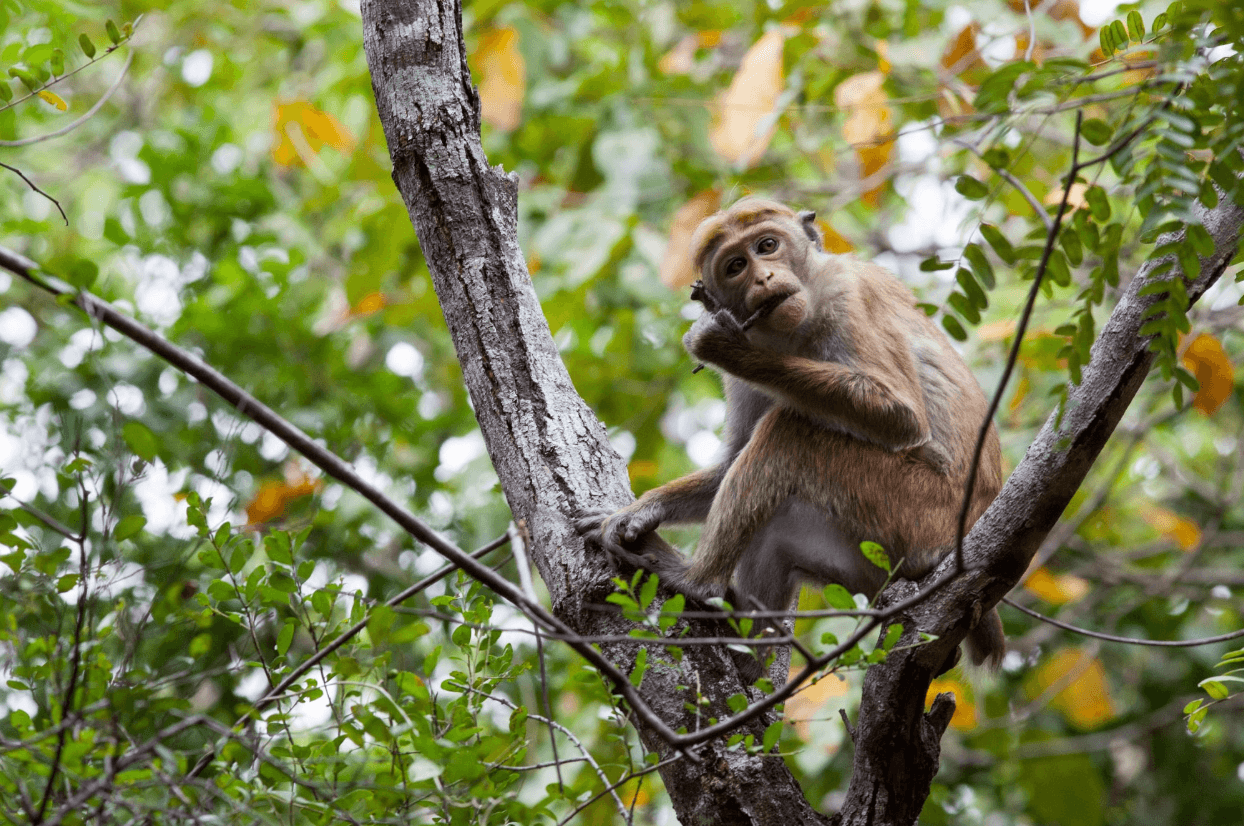
Walking through the arboretum today gives no obvious sign of the scrub jungle it once was. Footpaths wind between the trees and cross small streams on simple wooden bridges, shaded the whole way by a canopy that, in the older blocks, has fully closed overhead. Ebony, palu, satinwood, milla, and tamarind all stand among the arboretum’s older trees, species once so heavily logged for timber across Sri Lanka’s dry zone that they’d become genuinely rare in the wild, restored here in numbers.
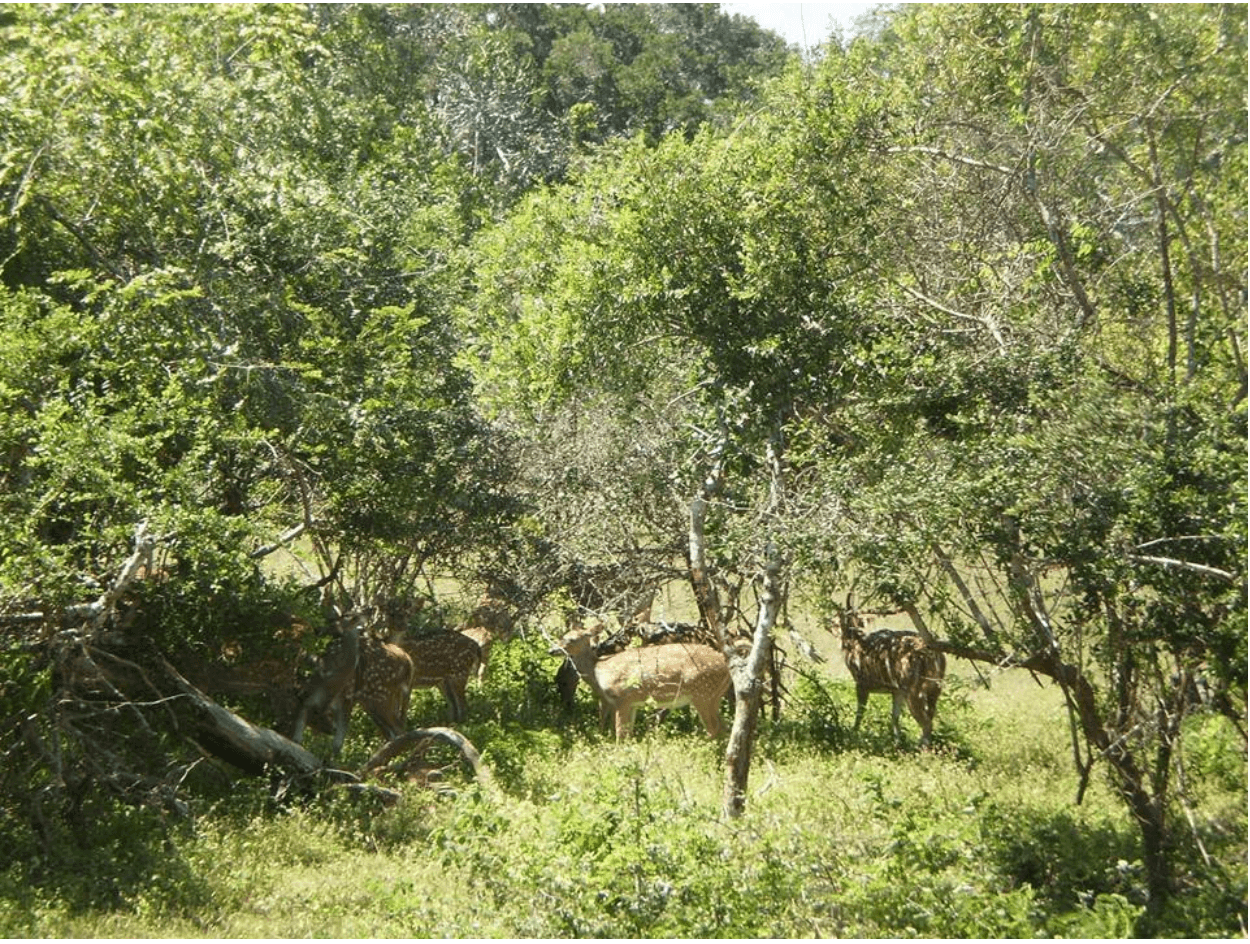
The birdlife is usually the first thing visitors notice: jungle magpie robins, jungle fowl, red-vented and black-capped bulbuls, black-headed orioles, crimson-backed woodpeckers, and brown-headed barbets are all regular sightings, alongside paradise flycatchers, sunbirds, tailorbirds, and parakeets moving through the branches overhead. On the ground, spotted deer, wild boar, porcupine, mouse deer, and black-naped hare are common enough to expect rather than hope for.
What the Night Safari Is Actually Looking For
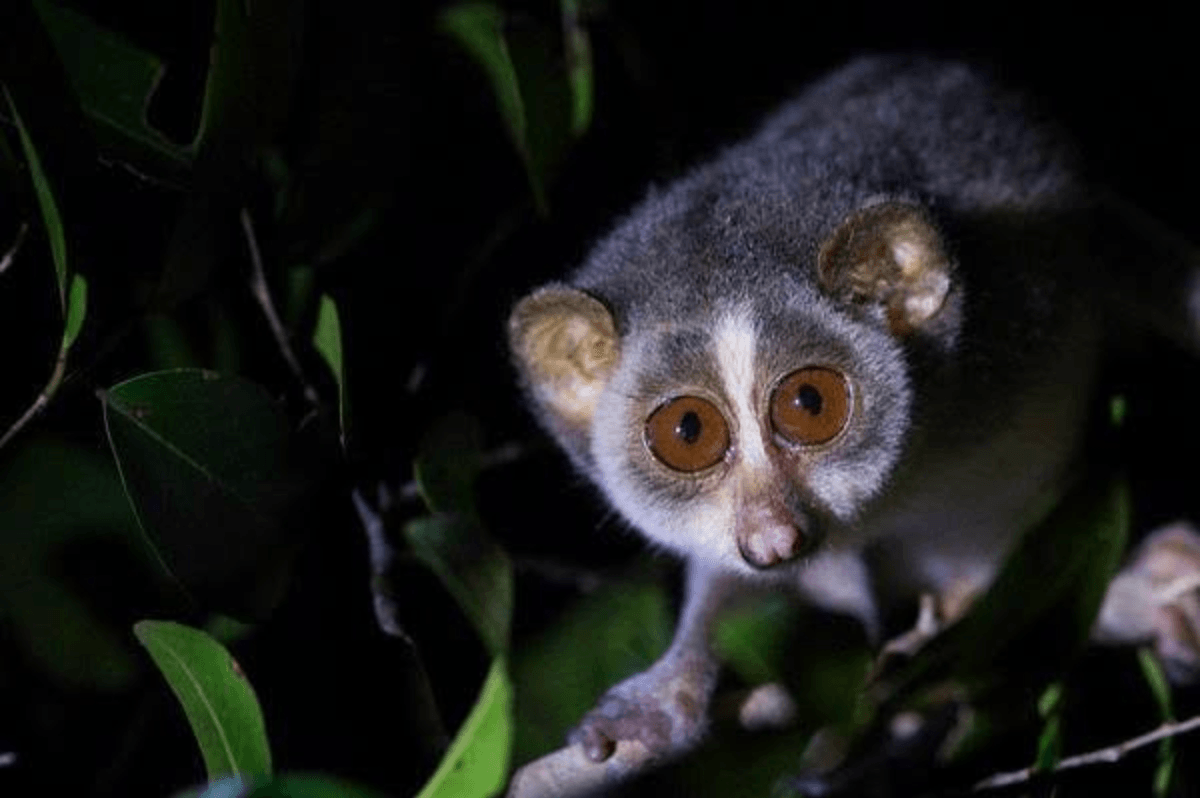
After dark, the arboretum’s best-known resident comes out: the grey slender loris, a small, wide-eyed nocturnal primate found only in Sri Lanka and southern India. A night safari here is built around tracking it, guides moving slowly along the same daytime footpaths, torchlight catching the loris’s distinctive reflective eyes high in the branches before it moves on. Owls and bats are regular company on the same walk. The whole experience runs at a different pace than a daytime visit, quieter, slower, built around watching rather than covering ground, in a forest that spent sixty years being deliberately left alone to see what would come back.
Seeing It From Amba Yaalu
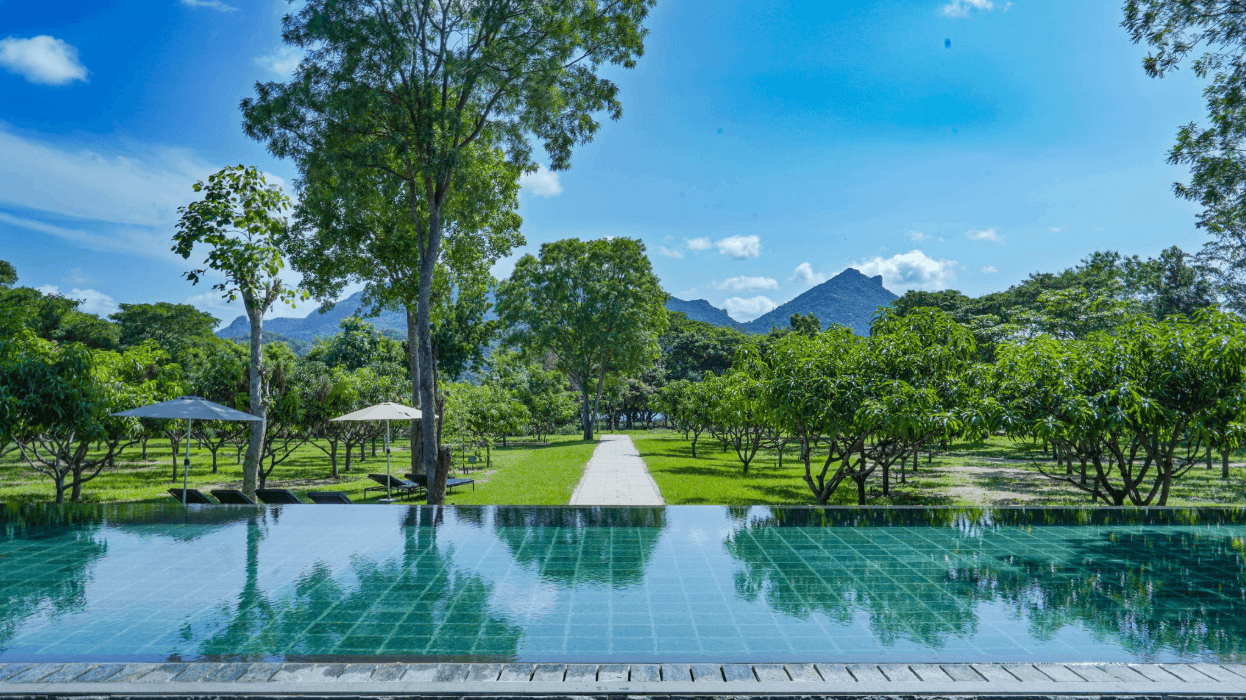
The arboretum sits just along the same road as Amba Yaalu Kandalama, close enough that a night safari in Sri Lanka arranged from the property is one of the more direct ways to see what Popham left behind. The Dambulla Cave Temple and Sigiriya Rock Fortress both sit within easy reach of the same stretch of road, so a night here fits naturally into the wider rhythm of a Cultural Triangle stay rather than requiring a special trip of its own.
Walk Into What He Left Behind
Sam Popham set out to grow mangoes and ended up restoring a forest instead, and fifty years on, Sam Popham’s Arboretum is still doing exactly what he left it to do. If you’d like to walk through it yourself, by day or tracking a slender loris after dark, we’re happy to help you plan it around your stay.
Blog
Related Articles