

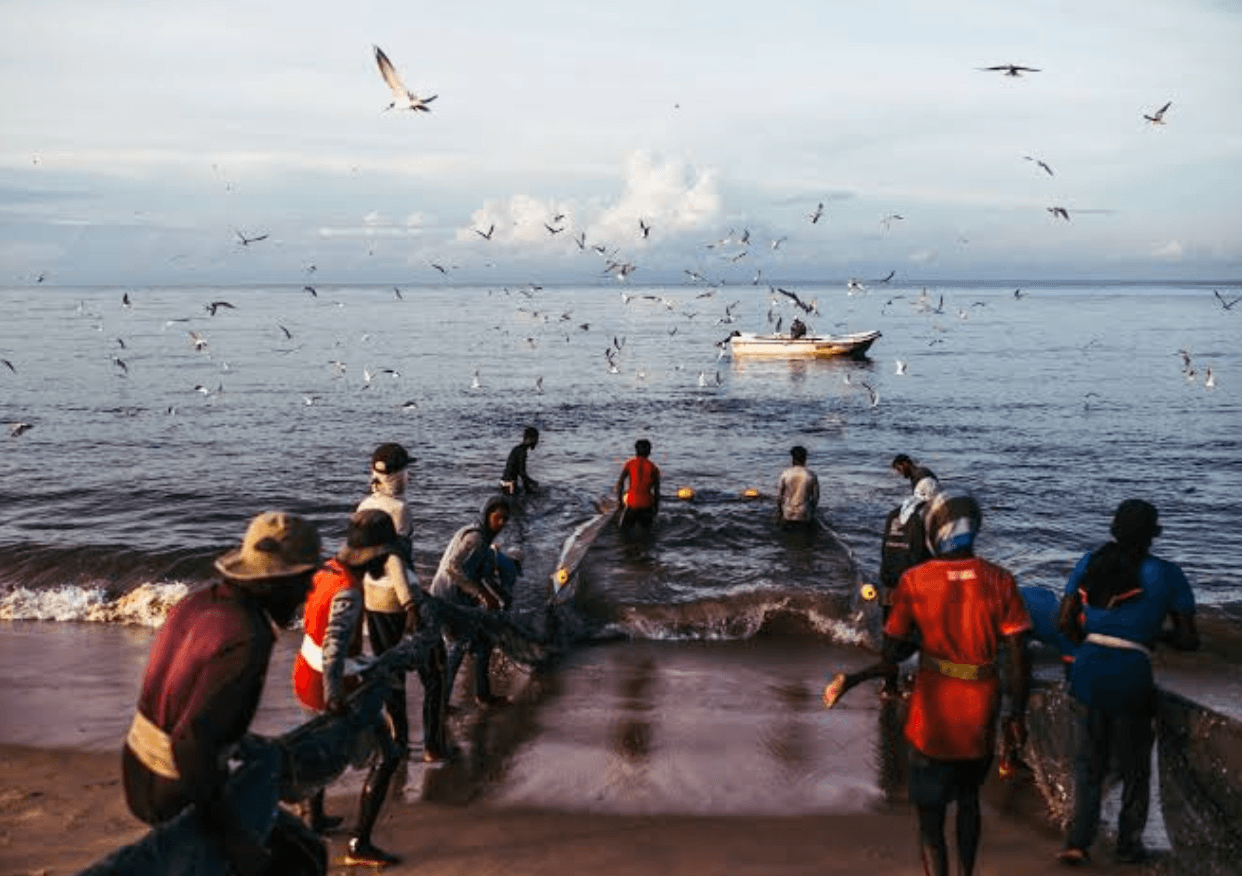
A ma-dela comes in by hand, a dozen or more people pulling the rope together along the sand, close enough to a shoreline village that half the settlement can watch the haul land. This is one of Sri Lanka’s traditional fishing methods, and that kind of working, communal coastline is what Deewara’s restored heritage homes and antiques are styled after.
What a Ma-Dela Is
A ma-dela is a large beach seine, a net set out from the shore to encircle a school of fish before being hauled back in by hand. Migrant fishermen introduced it to this coast. Smaller beach seines had already been in use here for at least a century before that, worked closer to shore and by fewer hands. Hauling a net this size requires a coordinated team, everyone pulling in rhythm, timing matched across the whole line to keep the net closing evenly. The net stays in constant use along parts of this coast today, worked by the same kind of team effort it always has been.
Traditional Fishing in Sri Lanka: Reading the Sea
Before a net goes in the water, fishers read the sea itself. Changes in the water’s surface colour signal a school of fish moving beneath it, a skill researchers studying these communities have termed folk oceanography. Fishers also track the behaviour of sea terns, using the birds’ movements to identify when the fishing season has started and roughly where a school is likely to be. Building this kind of judgement takes years of direct observation, passed from one generation of fishers to the next. Researchers have studied this knowledge specifically for how well it holds up against modern measurements, finding real, testable accuracy behind methods that look, on the surface, like folklore.
A Practice Shared Across the South Coast
Beach seine fishing and the ma-dela are practised beyond Mawella. A study of these fishing communities covered Galle, Matara, and Tangalle districts together, spanning a considerable stretch of Sri Lanka’s south coast. Eight rural coastal villages across that stretch were studied specifically for this knowledge, all working the same kind of net, all relying on the same read of water and birds to find fish.
How Deewara’s Design Connects to It
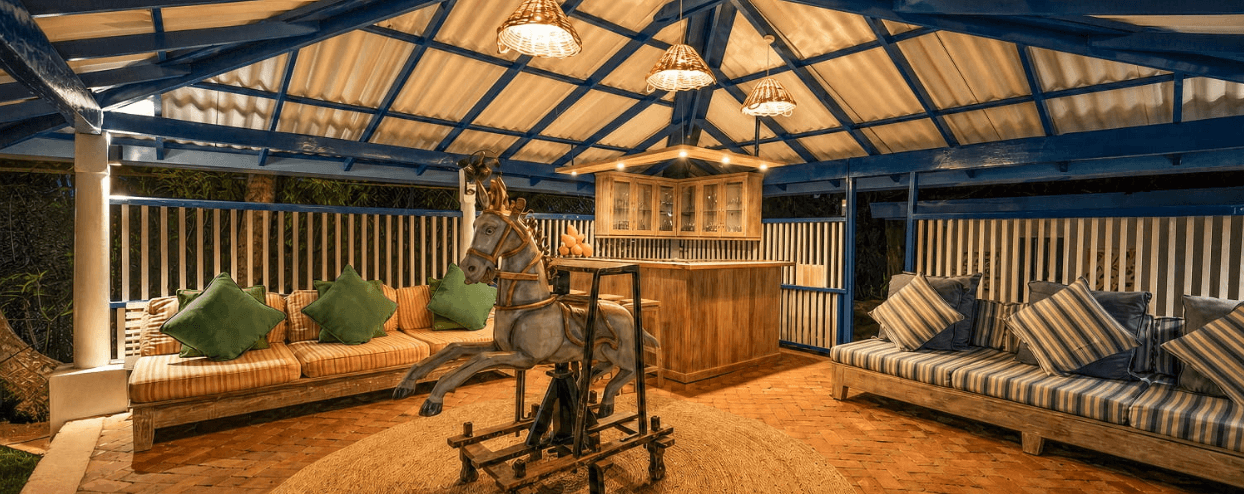
Deewara’s restored heritage homes and antiques are styled after modest coastal homes and the communal fishing life of Mawella’s fishing families. Among hotels in Tangalle, few build their design around this specific tradition. The kitchen sources seafood with proximity to Kudawella’s working fishing harbour, connecting the food to the same coastline. Guests can try seine-net fishing directly at Mawella Beach, alongside Rekawa turtle watching, lagoon kayaking, and birdwatching on the same stretch of water. Mawella Lagoon sits close by too, adding mangroves and birdlife to the same working shoreline the design references.
Plan Your Stay
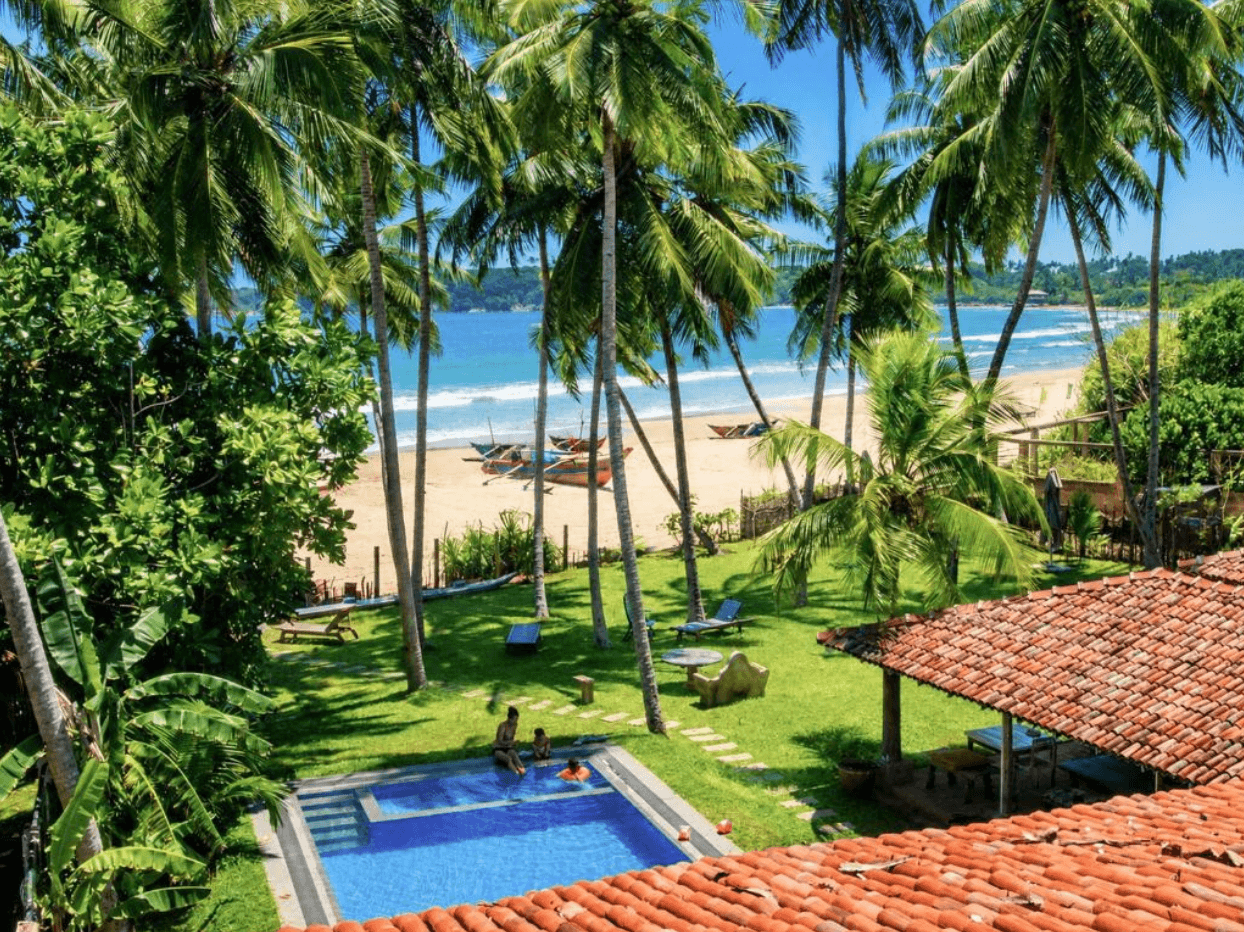
The ma-dela is still part of traditional fishing in Sri Lanka today, hauled in by hand the same way it always has been. Deewara sits on the same shoreline in Mawella, close enough for guests to watch the net come in themselves. Restored courtyards open steps from the beach, across five room types running from Courtyard rooms to a larger Suite. A pool and garden sit within the same grounds, and dining moves between the Dining Hall, a private balcony, or the tropical garden, with seafood sourced close to Kudawella’s working harbour. Explore our accommodation, check current offers, or contact us to start planning your stay.
Blog
Related Articles