October 28, 2026
Kandalama Lake in Sri Lanka: A Working Irrigation Reservoir Older Than Sigiriya

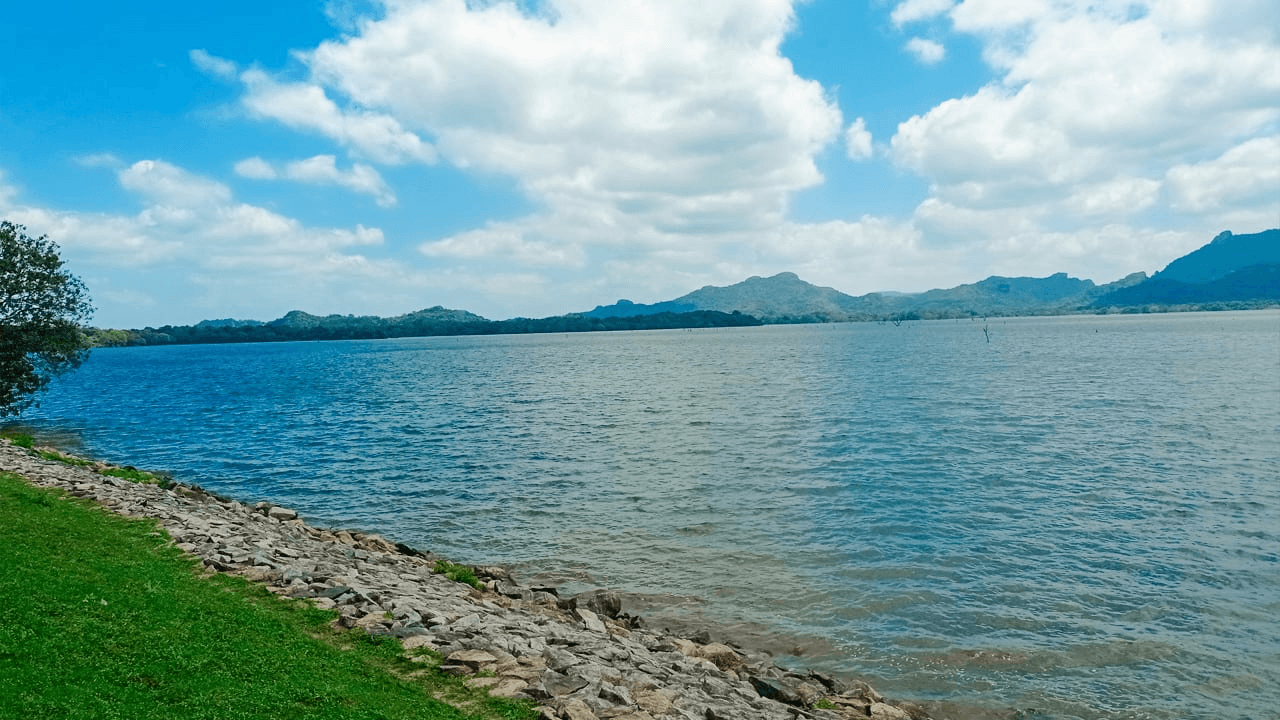
Kandalama Lake in Sri Lanka is an irrigation reservoir that predates Sigiriya and still waters farmland. A dam across the Mirisgoni Oya holds the water. After centuries of disuse, the Irrigation Department restored the tank between 1952 and 1957, and the Mahaweli Authority has managed its water since 1978. It lies in the dry zone, a short drive from the Dambulla cave temple and Sigiriya Rock.
What Kandalama Lake Does for the Dry Zone
Maps and guidebooks call it a lake. Irrigation records call it the Kandalama Wewa, a reservoir formed by a dam. In the dry zone, rain arrives for a few months of the year, and for more than two thousand years farms and cities have relied on water stored in tanks, the Sinhala wewa. A tank collects monsoon rain and runoff and releases it later. Sri Lanka is estimated to have had about 30,000 ancient tanks, and about 18,000 still stand. Anuradhapura, a dry-zone capital, could not have developed without them, and some of those tanks, Kandalama among them, still store water for farms today.
Kandalama Lake works the same way. A catchment of roughly 100 square kilometres of surrounding hills feeds it, water is available through the year, and the stored water irrigates farmland across the region, as far as Kekirawa.
| Kandalama Lake at a glance | Detail |
| Formed by | A dam across the Mirisgoni Oya, a tributary of the Kala Oya |
| Dam height | About 21 metres |
| Size | About 4.8 km long and 2.3 km wide at its longest and widest |
| Catchment | Roughly 100 square kilometres |
| Restored | 1952 to 1957, by the Irrigation Department |
| Water managed by | The Mahaweli Authority, since 1978 |
| Irrigates | Farmland across the region, as far as Kekirawa |
Older Than Sigiriya: Two Accounts of Its Origin
Popular accounts credit King Vasabha and put the reservoir at more than 1,700 years old. Some scholars identify it with the Duratissa Wewa, a tank built by King Saddha Tissa between 137 and 119 BC. The name Kandalama itself does not appear in the ancient chronicles, so neither account is settled. Sigiriya’s rock fortress dates to the 5th century AD. On either account, the reservoir is older.
Restored in 1952
The Irrigation Department’s own history says the tank had been abandoned for centuries and overgrown by forest. Restoring it took a construction unit that the department set up for the purpose in 1952, and the work ran for five years. Then the floods of 1957 to 58 breached the dam, and the repairs that followed raised the tank’s capacity. In 1978 the Mahaweli Development Authority took over the management of its water, and the reservoir now forms part of the Mahaweli Multipurpose Irrigation Scheme.
Water Engineering Within a Short Drive
Kandalama, Sri Lanka, lies about 8 kilometres north-east of the Dambulla cave temple, a 1st-century BC site, with Sigiriya a short drive away. Two other sites nearby show the same tradition of water engineering at different scales.
Sigiriya. Rain is the only source of water on the rock, so the site collects it in pools and channels it through underground conduits and drains. The fountains in the water gardens, with spouts of perforated limestone plates, are fed by gravity from a tank above them, and Sri Lanka Tourism says they still work in rainy weather.
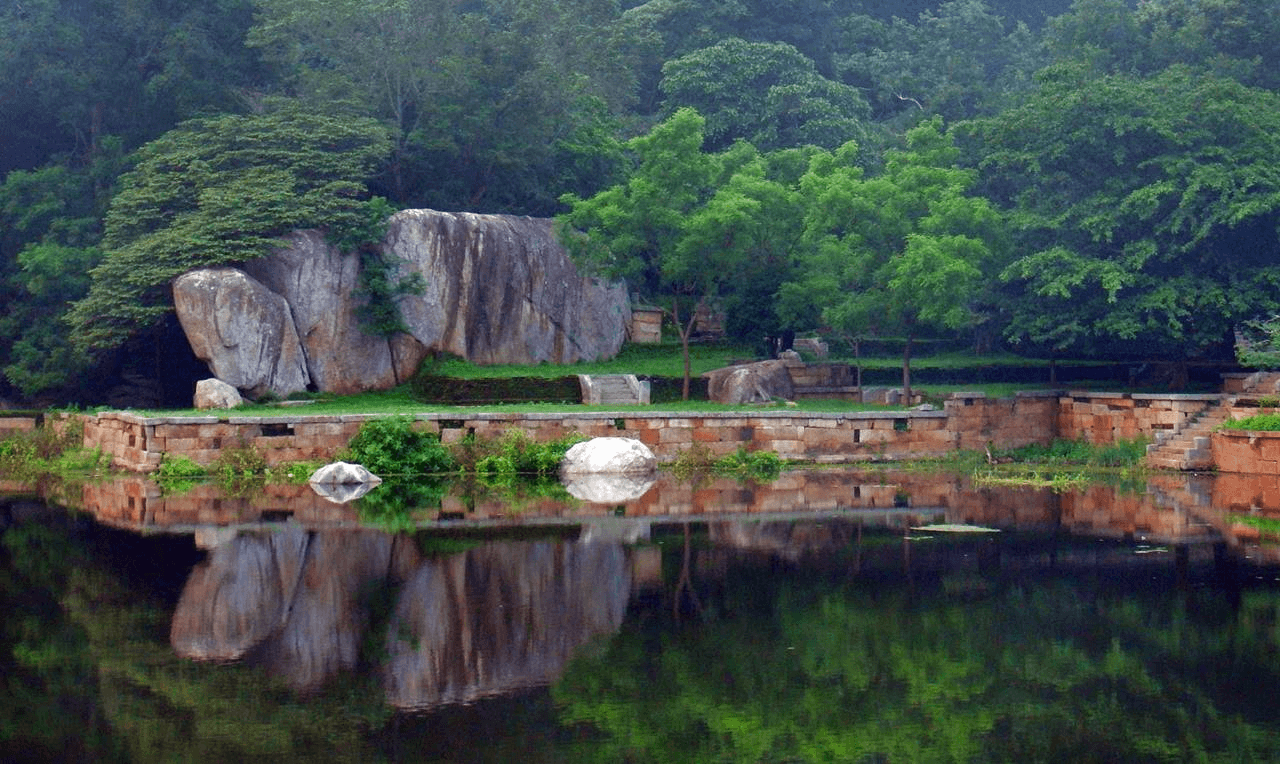
Kaludiya Pokuna. This forest monastery was first settled in the 2nd century BC. Its main buildings, from the mid-9th century, stand on a platform surrounded by a moat, among ruins that include a stupa, an ordination hall, and a walking promenade. The Black Water Pool that gives the site its name lies among them. Today the whole site, more than 100 acres of forest, is in the care of a Kandy girls’ school. The Department of Archaeology placed it there in the first arrangement of its kind in Sri Lanka, where a school holds custody of an archaeological site. A visit to Kaludiya Pokuna takes about 2 hours and is rated Moderate, with a recommended 7.00am start.
Seeing the Lake From Above
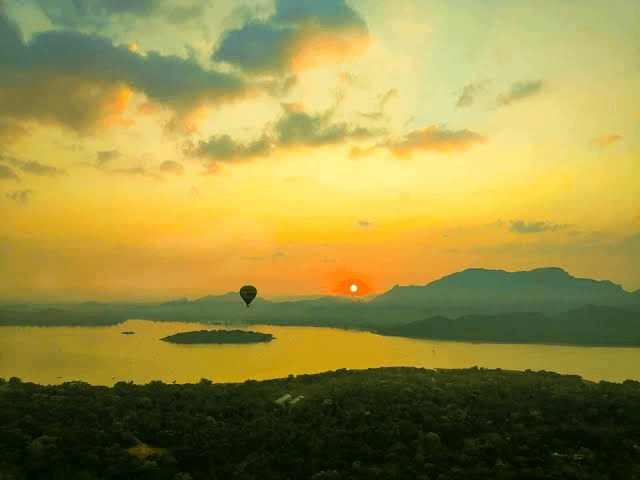
A sunrise balloon flight launches from Kandalama at 5.45am. It lasts about 2 hours, floats between 1,000 and 2,000 feet, and is rated Easy. As the sun rises over the tank, the view runs from the Golden Buddha at Dambulla to distant Sigiriya, across lush forest.
On the ground, Sam Popham’s Arboretum lies along the same road as the lake. The wider list of experiences around Kandalama includes the arboretum’s night safari, birdwatching trails, and a guided village e-bike ride.
Stay on the Banks of the Lake
Kandalama Lake is easiest to see from its own banks. Amba Yaalu Kandalama sits beside the reservoir inside a plantation of 457 TJC mango trees, and its 33 rooms and infinity pool look over the lake and the mango garden. The property is Sri Lanka’s first hotel fully managed and staffed by women, themed on the novel Amba Yaluwo and the golden era of Sri Lankan cinema. Among the hotels in Kandalama, it arranges the balloon flight, the Kaludiya Pokuna visit, and the night safari at Sam Popham’s Arboretum.
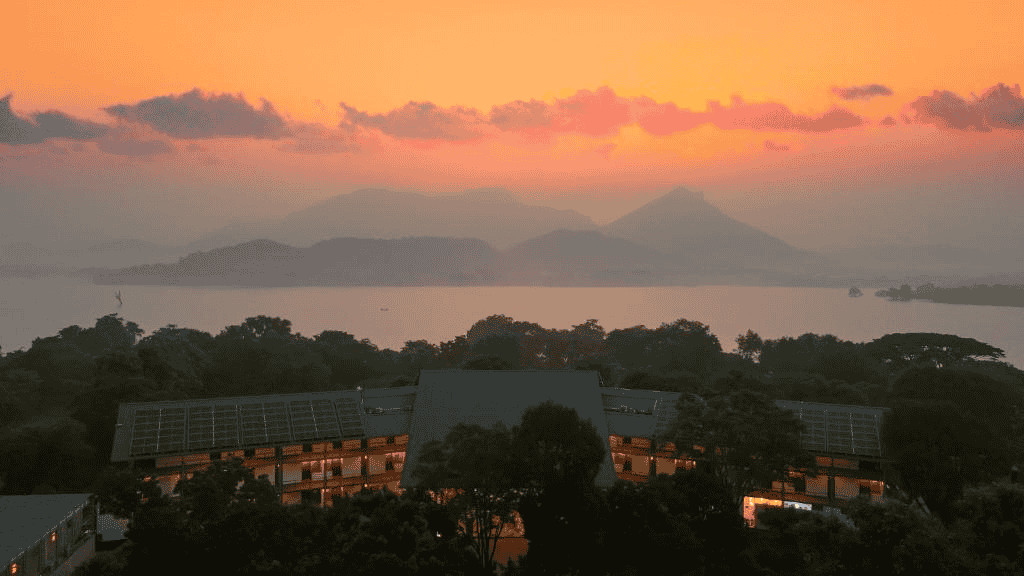
Explore our accommodation and current offers, or contact us for help planning your stay. A night on its banks puts a reservoir older than Sigiriya outside the window.
Blog
Related Articles