

August 31, 2026
Kushtarajagala and the Long Memory of Healing in Weligama

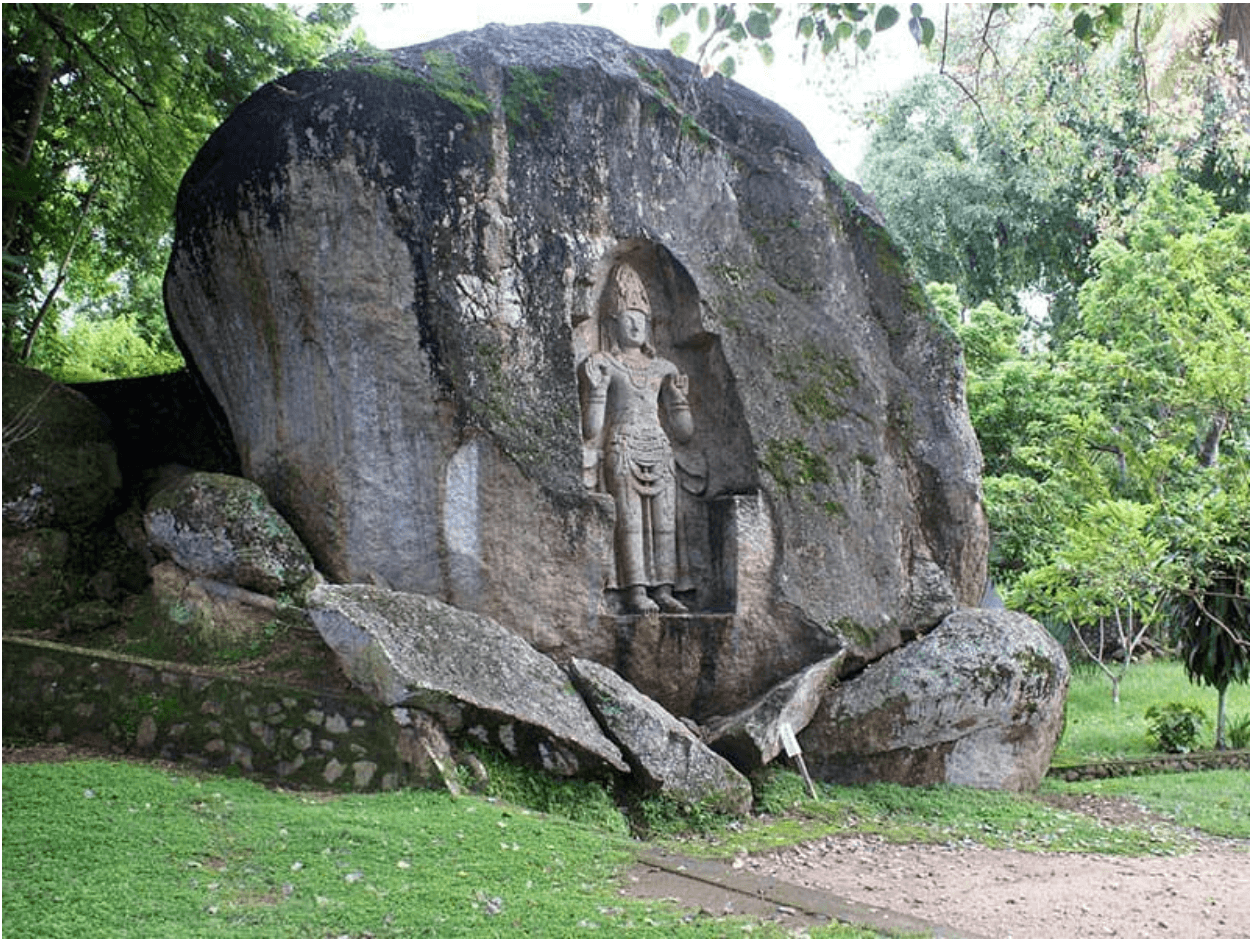
In a quiet grove off Weligama’s old coastal road stands one of the more curious carvings on Sri Lanka’s south coast: a rock-cut figure known locally as Kushtarajagala, the rock of the leper king. Standing bare-chested, wrapped in a carved dhoti and girdle, adorned with jewellery, and worn soft by centuries of monsoon rain, the carving marks Weligama as somewhere people have come looking for a cure, one way or another, for a very long time.
The Statue and Its Setting
The figure stands just under four metres tall, cut into the face of a large boulder and set into an arched niche roughly two metres above the ground. The upper body is bare, the lower half wrapped in a carved dhoti and girdle, with necklaces at the neck, bangles on the arms, and anklets at the feet. Its headdress carries four small seated Buddhas. Moss has taken hold across much of the surface, and the edges of the robe and the face have softened over time, though the outline is still sharp enough to make out clearly from the path below.
The site sits within what’s known today as the Kushtarajagala Viharaya, close to the remains of the old Agrabodhi Vihara, in a shaded grove near a level crossing on the Colombo to Matara railway line, a short walk from the beach where most visitors to Weligama spend their time. Weligama itself was more than a fishing village even in ancient times. It served as a working harbour and a stop for traders arriving from across the Indian Ocean.
The Legend of the Leper King
Local tradition explains the carving through the story of a king who arrived in Weligama afflicted with kushta, a severe skin disease, and was cured. Accounts differ on where he came from, some describing him as a visiting foreign ruler, though none agree on a name or a homeland. The details of the cure itself change depending on who tells it:
- Cured by a physician. A local doctor treated the king and restored his health.
- Cured by a vow. The king promised an offering to a deity, usually named as Vishnu or the god Natha, in exchange for his recovery.
- Cured by coconut milk. A simpler telling has him recover after drinking coconut milk daily for three months.
Every version ends the same way. Before leaving Weligama, the king had his own likeness carved into the rock as an offering of thanks, then departed, leaving the statue as the only trace of his visit.
What Archaeologists Say Kushtarajagala Really Depicts
Sri Lanka’s Department of Archaeology dates the carving to the sixth or seventh century CE. It identifies the figure not as a king, but as Avalokiteshvara, a Bodhisattva associated in Mahayana Buddhist tradition with compassion and healing.
That reading comes from a detail in the stone. The headdress carries four small meditating Buddhas, a standard attribute of Avalokiteshvara in Buddhist iconography, not a marker of royalty. Mahayana Buddhism also had a real, if secondary, presence in Sri Lanka alongside the island’s dominant Theravada tradition around this period, so a carving of this kind isn’t out of place on the south coast.
The two accounts may not be as opposed as they first look. Devotees who recovered from illness commonly commissioned an image of a healing-associated Bodhisattva as an offering of thanks, and Avalokiteshvara, linked to compassion and the relief of suffering, fits that purpose closely.
Read this way, the vow version of the legend sits comfortably with the archaeology: a devotee cured of an illness commissions an image of the deity they appealed to, rather than a king carving a literal portrait of himself. No inscription at the site names a donor, so this remains an inference rather than documented history. It is, though, a more coherent account of how the carving came to exist.
Ayurvie Weligama, and a Coast Built on Healing
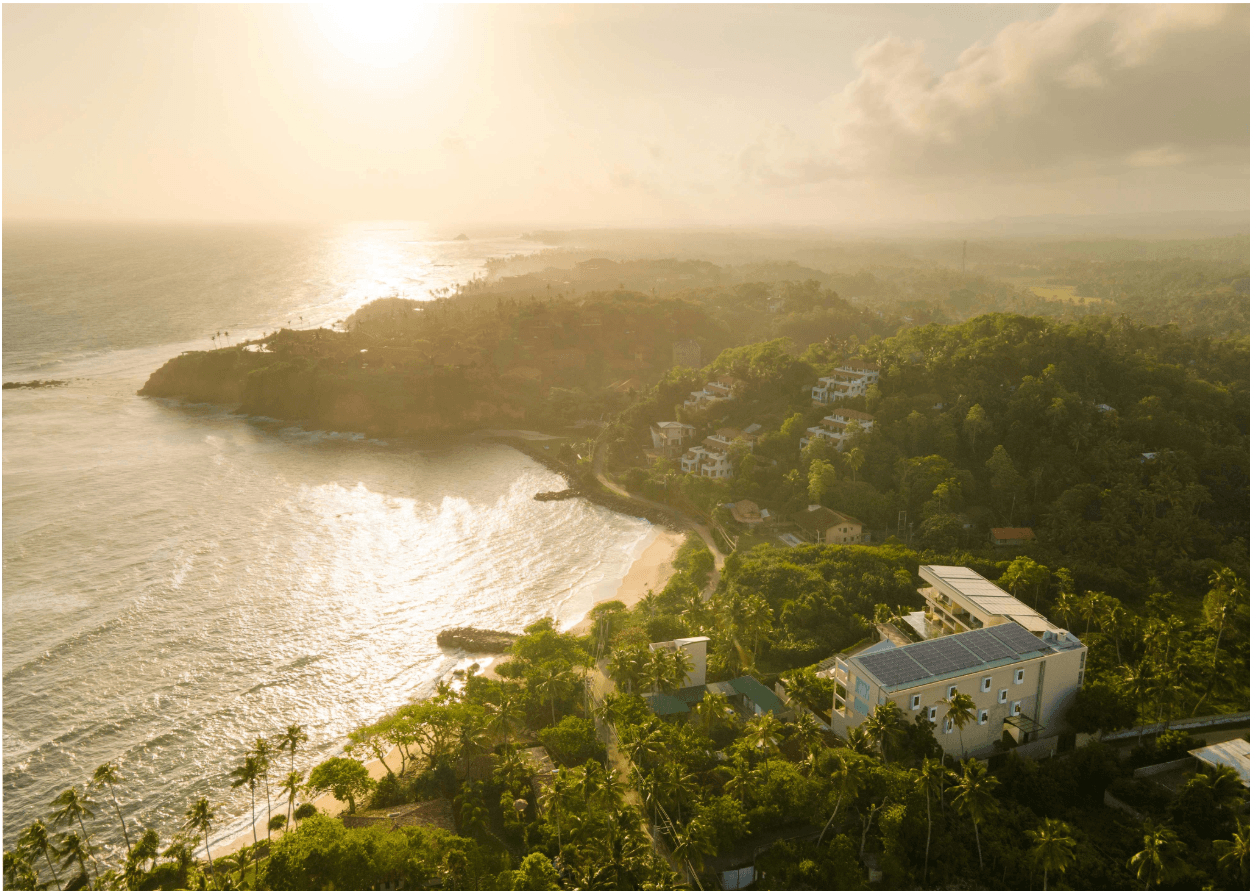
Weligama has been described as a place of healing for centuries, and Kushtarajagala sits at the start of that history. Devotees still visit the statue today, many of them seeking relief from illness.
As an ayurveda retreat in Weligama, we continue this long tradition of healing on the south coast. At Ayurvie Weligama, an in-house physician identifies each guest’s dosha through consultation and a review of medical history, then shapes treatment, diet, and daily yoga around it. Meals are organic and vegetarian, prepared to suit each guest’s individual constitution rather than served from a fixed menu. Our Panchakarma programmes follow practices described as three thousand years old, carried out in the traditional way. Our design follows Vastu Vidya, the Vedic architectural tradition, and guests can select rooms to suit their body constitution, with several looking directly out over the ocean.
Explore our accommodation and current offers, or contact us for help planning your stay. Kushtarajagala is a short trip away, worth visiting on its own terms before settling into a stay built on this same coast’s much older history of healing.
Blog
Related Articles