


At first glance, tea estates in Nuwara Eliya can seem like uninterrupted green hills. Look more closely and the order becomes clear. The curved rows, scattered shade trees, drains, paths and factory buildings all serve a practical purpose.
A tea estate is a working agricultural system shaped by altitude, rain, slope and human skill. Once you know what to look for, even a short drive through tea country becomes more informative.
Start with the Shape of the Rows
Modern tea is generally planted along the contours of the hillside, which is why the rows curve around the slope rather than running straight up and down.
Contour planting slows rainwater and helps limit soil loss. It also creates more practical working lines across steep ground.
Across tea estates in Nuwara Eliya, tightly curved rows usually indicate a steeper section, while broader lines often appear on gentler ground.
Notice the Height of the Tea Bushes
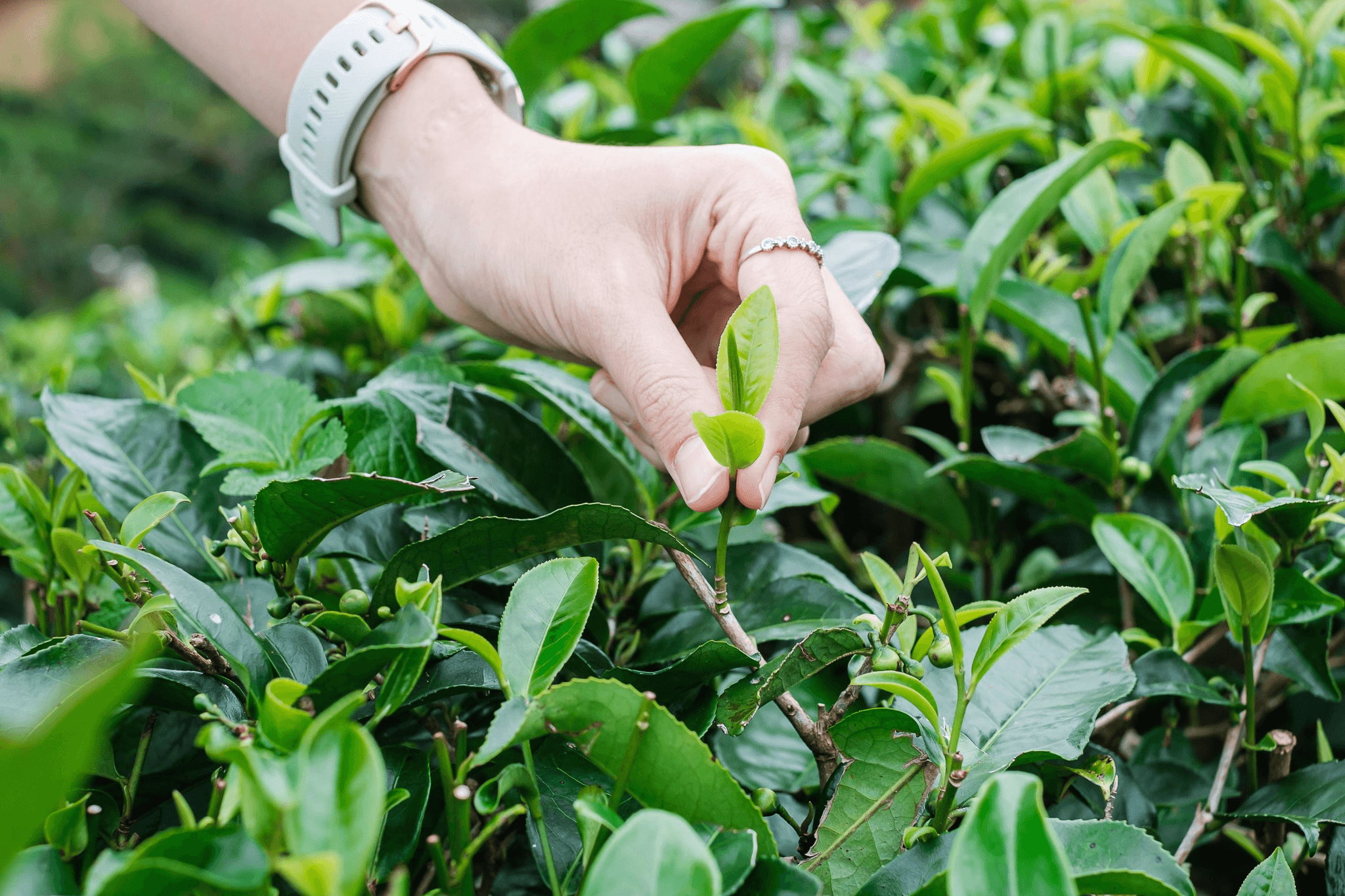
Left alone, a tea plant can grow into a small tree. Estate bushes are kept low through pruning so that fresh shoots remain within reach.
The level upper surface is known as the plucking table. This is where workers select the bud and youngest leaves used to make tea.
Fields may look different because they are at separate stages:
- Recently pruned bushes appear low and sparse.
- Recovering fields show fresh growth.
- Mature fields have a dense, level surface.
- Newly planted sections contain smaller plants and wider gaps.
An uneven patch is therefore not always neglected. It may be part of a pruning or replanting cycle.
Look for Shade Trees
The tall trees rising above the tea provide partial shade and help soften wind. Their roots and fallen leaves also support the soil, especially on exposed slopes.
They are spaced rather than grown as a closed canopy because tea still needs light. Estate management involves giving the bushes shelter without blocking too much sun.
Follow the Drains and Stone Lines
Nuwara Eliya receives regular rain, and hillside fields need careful water control. Small drains carry excess water away without allowing it to rush directly downhill.
You may also see:
- Stone terraces
- Grass-covered banks
- Mulched ground
- Vegetation between rows
- Larger channels below the fields
These features help reduce runoff and hold soil in place. Tea needs moisture, but water remaining around the roots can harm the plant.
Read the Paths and Estate Roads
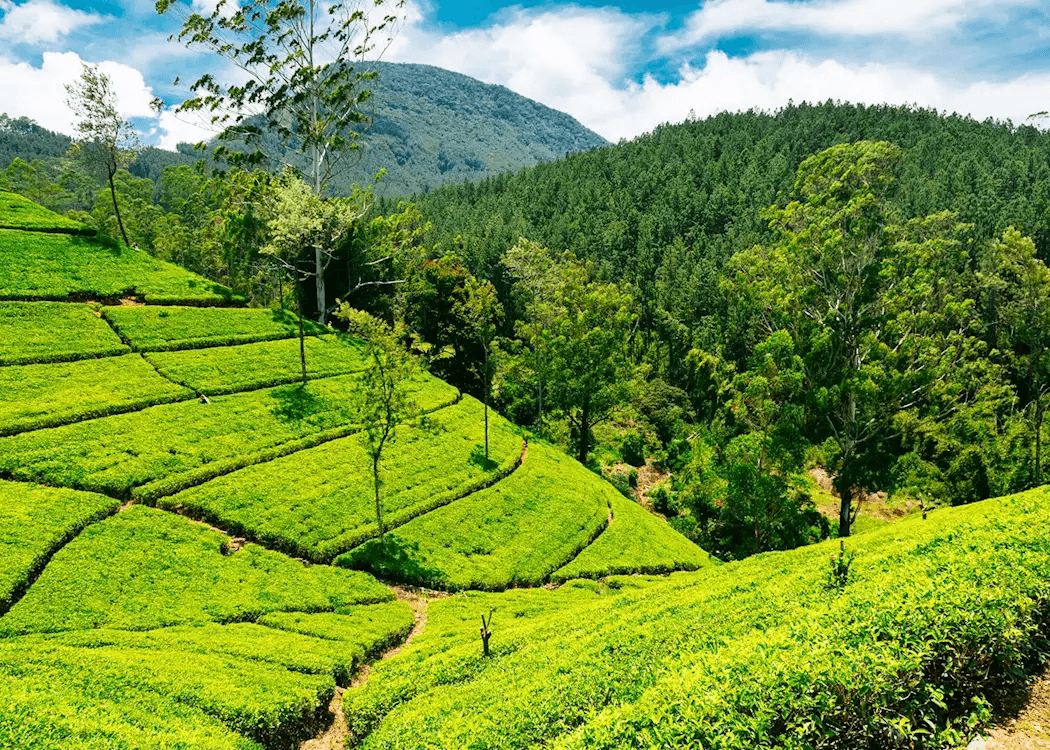
Narrow footpaths connect fields and working sections. Wider roads allow harvested leaf to move towards collection points and factories.
Fresh leaf begins changing soon after plucking, so it must be transported and processed without unnecessary delay. This explains why estate roads and factory access are part of the production system.
Visitors should remain on approved routes and avoid entering active fields without permission.
Find the Factory in the Wider View
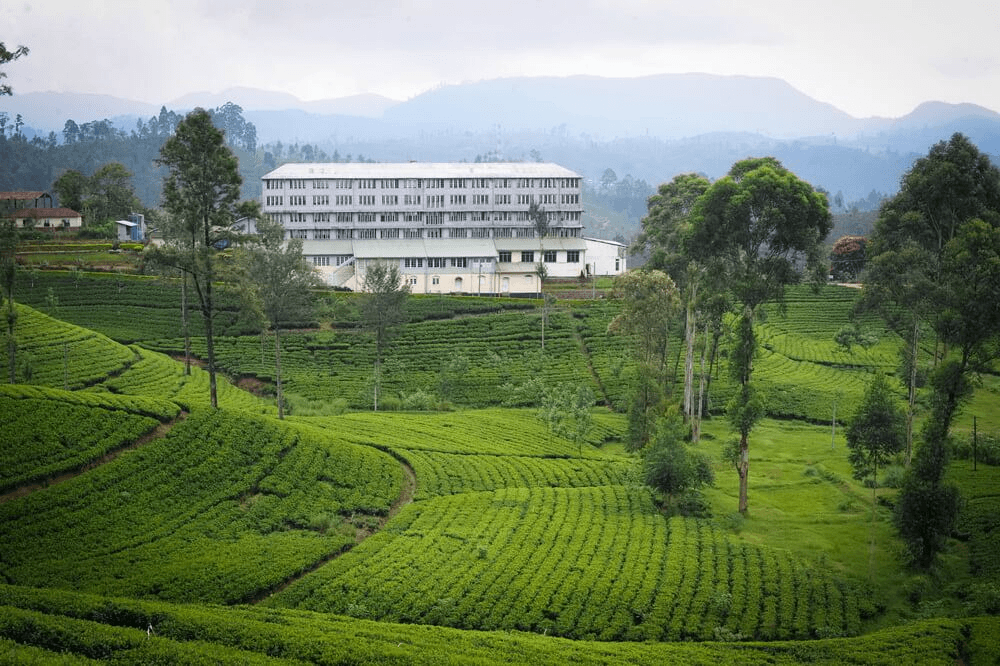
A tea factory is often recognisable by its long shape and ventilation openings. Fresh leaf needs air during withering, the first major processing stage.
Factories are kept within reach of the fields because fresh leaf does not travel well. Inside, it passes through withering, rolling, oxidation, drying and sorting before becoming finished black tea.
The wider estate can therefore be read as one connected system: fields produce the leaf, paths and roads move it, and the factory processes it.
Pay Attention to Altitude and Direction
Nuwara Eliya is Sri Lanka’s highest tea-growing district on average. Its cool conditions and mountainous ground produce teas generally known for a light cup and delicate fragrance.
Tea from separate fields on the same estate can still differ. Altitude, soil, wind exposure, slope direction and recent weather all affect growth and flavour.
A sunny hillside may dry differently from a sheltered field. A wind-exposed section may grow at a different pace from one protected by trees. These small differences matter to experienced tea makers and tasters.
Remember the People Behind the View
The neat appearance of an estate depends on skilled work throughout the year. Plucking, pruning, drainage, field care, transport and factory processing all require judgement and timing.
Tea workers should be treated as people doing skilled agricultural work, not as part of the scenery. Ask before taking photographs, keep away from active work and follow local guidance. Paying attention to this human side of the estate helps connect the carefully maintained fields with the experience, judgement and labour behind every finished cup.
Stay within Nuwara Eliya’s Tea Country
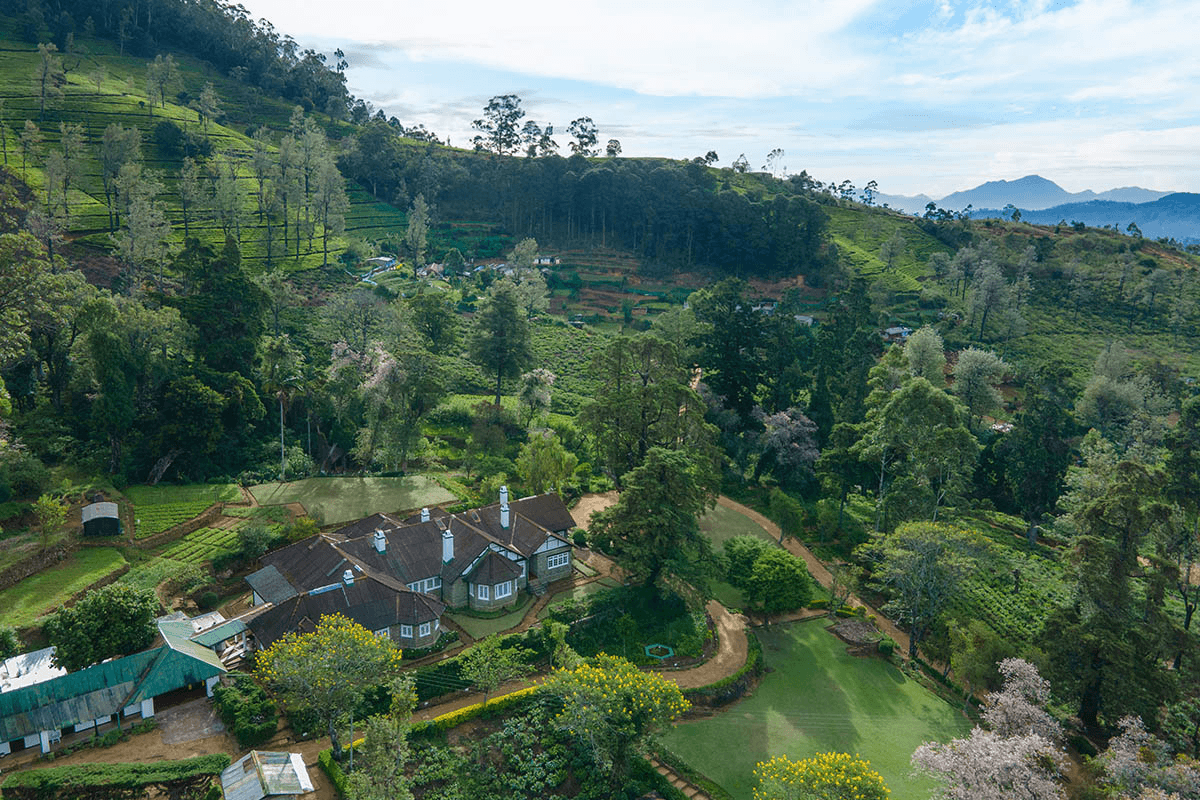
Scottish Planter is a century-old stone property that reflects the history of tea estate bungalows in Nuwara Eliya. Set near Ragala, the bungalow places guests close to working tea fields, estate roads and the cool, misty hills described throughout this guide.
The accommodation retains much of the character associated with an old planter’s residence. Individually designed rooms and suites feature details such as wooden floors, four-poster beds, garden views and fireplaces in selected room categories. This gives guests a chance to experience the tea-country setting from within a building connected to the region’s estate history.
During a stay, guests can visit a working tea factory, travel through Ragala by tuk-tuk, join a birdwatching session or take part in a cooking and garden experience. These activities give further context to the fields, factories, local produce and communities that shape this part of Nuwara Eliya.
View the accommodation, check the latest special offers or contact Scottish Planter for help planning a stay connected to Sri Lanka’s high-grown tea country.
Blog
Related Articles