


July 31, 2026
Birdwatching in the Knuckles Range: What to Look For from Wild Glamping Knuckles

Wild Glamping Knuckles sits inside one of Sri Lanka’s richest forest reserves, and that alone makes it worth packing a pair of binoculars. Birdwatching in the Knuckles range covers 128 recorded species, 17 of them found nowhere else in the world, and the trail starts a short walk from your tent rather than a long drive away.
Why the Knuckles Range Draws Serious Birders
The Knuckles Conservation Forest earned its UNESCO World Heritage status partly because of the sheer variety of species found within it, and birds are a large part of that case. The terrain does much of the work here: as the range climbs, the forest shifts through distinct zones, and each one favours a different set of species. Broadly, the trail moves through:
- Lower semi-evergreen and riverine forest, where ground-feeding babblers and streamside kingfishers are common, and larger birds such as the Black Eagle are often seen circling on thermals above the valley rather than perched.
- Mid-elevation forest edge, the zone that produces most of the trail’s regular sightings, barbets, bulbuls, and flowerpeckers working the fruiting trees.
- Higher montane cloud forest near Corbett’s Gap, cooler and denser, where nectar-feeders such as sunbirds and the Sri Lanka hanging parrot take over, alongside parakeets and leafbirds.
Guides who work this trail regularly know which stretch tends to produce which birds at which time of day, which is one of the better reasons to go with one rather than trying to work it out alone on a first visit.
Birds in this kind of forest rarely move alone. Watch for mixed flocks moving together through the canopy, several species foraging as one loose group before drifting on to the next patch of trees. Spotting one of these flocks is usually a better sign than spotting a single bird; it means you have found a patch worth standing still in, and a few minutes of patience there will often produce more sightings than an hour of walking.
What the Trail Actually Involves
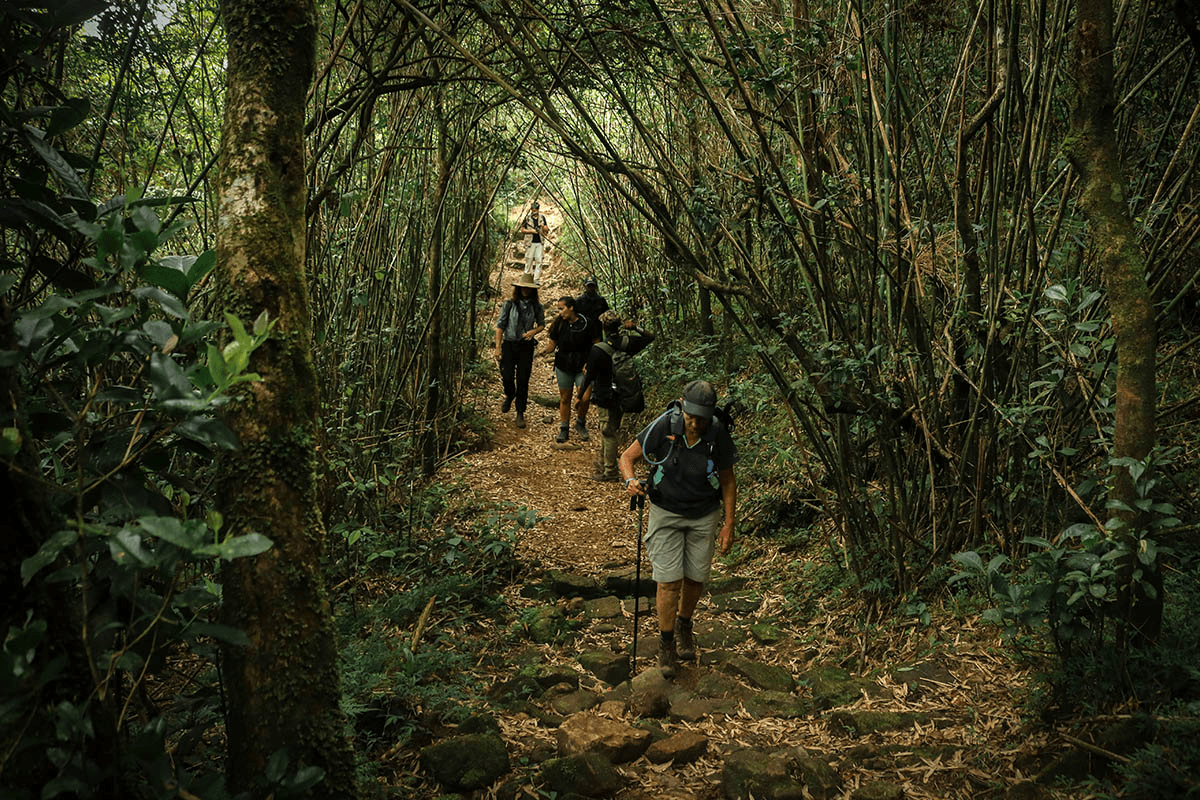
The bird watching trail from Wild Glamping Knuckles is graded easy and takes roughly three hours, led by a resident naturalist. It suits a genuine beginner as easily as someone who already knows their flycatchers from their flowerpeckers, and that same gentle grading makes it a natural first outing on arrival, before tackling one of the property’s longer treks.
Timing is worth thinking about before booking. Early morning tends to bring the most activity, as birds feed after a cool night and before the day’s heat builds, though an evening walk has its own advantages, calmer light, and birds settling into roosts rather than actively foraging, which can make some species easier to observe for longer. Neither is wrong; it depends on whether the guest would rather see more movement or get a longer, quieter look at fewer birds.
A few practical notes worth passing on to guests before they book:
- What to wear: sturdy trekking shoes, neutral-coloured clothing (so as not to startle anything before you’ve had a proper look), a raincoat, and a jacket, since the higher ground gets chilly even close to the equator.
- What’s included: a guide, leech socks, and trekking poles where available.
- Leeches: they’re part of the forest, not a sign anything has gone wrong. Harmless, and the guide will show you how to deal with them without much fuss.
Birdwatching in the Knuckles Range: Species Worth Watching For
This is where the trail earns its reputation. The species below are grouped by where on the trail you’re most likely to find them, so it reads less like a checklist and more like a rough map of what to expect at each stage of the walk.
Forest-Edge and Mid-Elevation Regulars
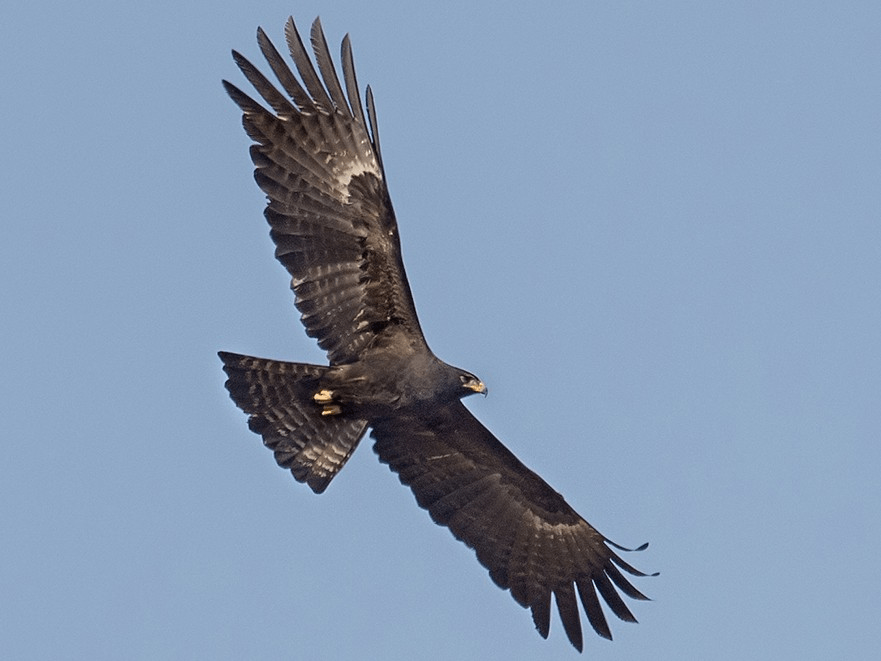
These are the birds most guests come away having seen, spotted along the mid-elevation stretch where fruiting trees draw a steady stream of activity:
- Black Eagle: a large raptor more often seen soaring on thermals above the valley than perched, so it’s worth glancing up as often as you scan the treeline.
- Pale-billed Flowerpecker: small and fast-moving, usually spotted flitting between fruiting trees rather than sitting still for long.
- Yellow-fronted Barbet: a stockier, more vocal presence, often heard calling from cover before it’s actually seen.
- Yellow-eared Bulbul: a regular in mixed flocks moving through the mid-canopy, identifiable by its pale ear patch.
- Babblers: several species move in noisy ground-level or low-canopy groups, usually heard before seen, chattering as they work through leaf litter and low branches.
- White-throated Kingfisher: found near streams and water crossings on the lower part of the trail, easiest to spot perched still on an open branch before it dives.
High-Elevation Specialists Near Corbett’s Gap
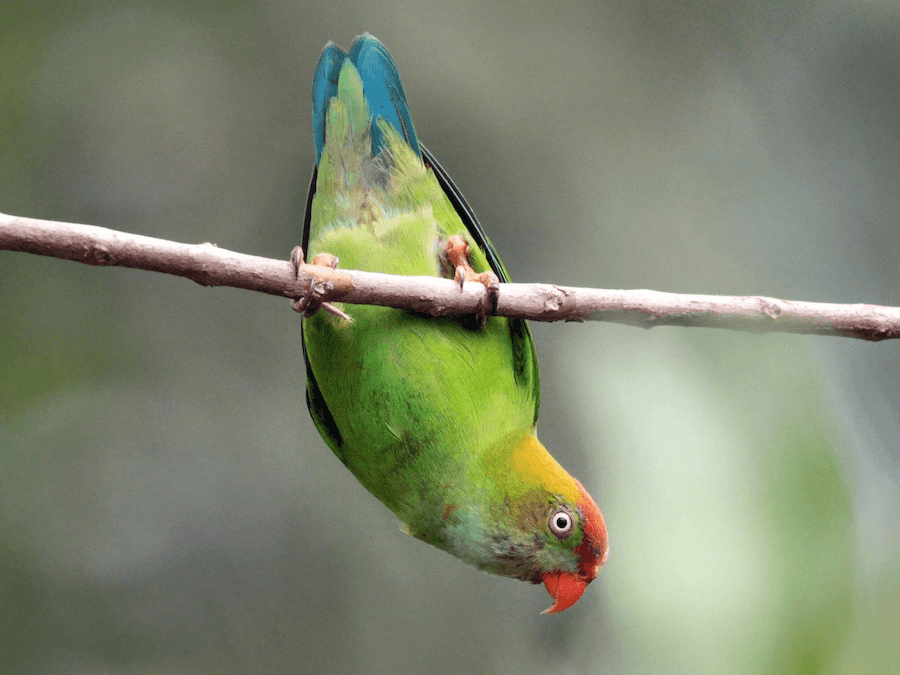
As the trail climbs towards Corbett’s Gap, the forest turns properly montane, low, tightly packed trees adapted to strong wind and sun, and the species mix shifts with it:
- Sri Lanka hanging parrot: a nectar-feeder, often seen hanging upside down while working a flowering branch, which is where the name comes from.
- Sunbirds: small and quick, drawn to the same flowering trees as the hanging parrot, more often located by a sharp, high call than by sight.
- Parakeets and leafbirds: both work the fruiting canopy at this elevation, and both blend well enough into the foliage that a guide’s ear for their calls matters more than a guest’s eye.
- Sri Lanka Whistling Thrush: the trail’s shyest resident, a bird more often heard than seen, its call a low, resonant note carrying through the cloud forest rather than a quick, obvious song. Patience and quiet are the only real way to catch a glimpse of this one.
Reading a Mixed Flock
None of these species tends to move alone for long. Watch for a “bird wave”, several species foraging together as one loose group before drifting on to the next patch of forest. A mixed flock like this crossing your path is usually the best sign on the whole walk: it means several species are active in the same small area at once, and a few minutes standing still nearby will generally produce more sightings than continuing to walk.
For anyone bringing a camera rather than just binoculars, the low light under a closed canopy is worth planning for; a fast lens matters more here than a long one, since most sightings happen at close range in dense cover rather than across open ground. Patience does more work than equipment. Standing still near a fruiting tree or a stream crossing for ten minutes will usually beat walking further and faster.
Timing matters here too: an evening stroll tends to be the best time to catch these birds settling for the day, with cooler air and softer light making the whole walk feel less like a checklist exercise and more like a quiet hour spent in someone else’s territory.
Why Stay Inside the Knuckles Forest Reserve
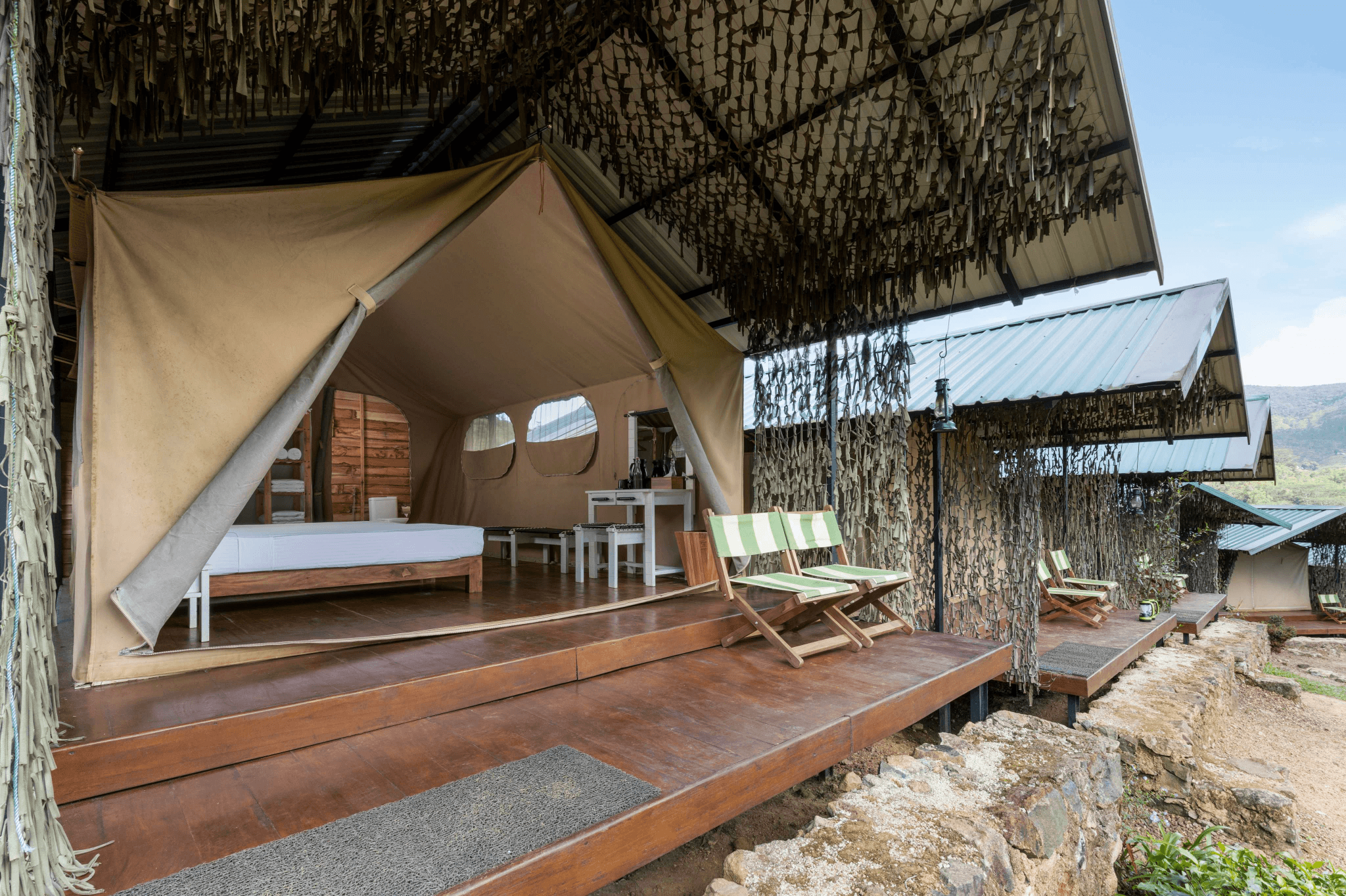
Birding rewards an early departure, and staying inside the reserve rather than driving in from outside removes the one obstacle that usually gets in the way of that: the commute. This is where an eco wild glamping stay earns its keep:
- No commute: the trailhead is a short walk from the tents, not a drive, so an early start doesn’t mean an earlier alarm.
- Genuinely off-grid: no Wi-Fi and no mains electricity beyond solar-powered lamps and a generator running for limited hours, which sounds like a trade-off until it becomes the reason an early night, and an early start, actually happens.
- Comfortable enough to make it work: the Deluxe Tents are raised above ground on eco-friendly structures, with en-suite bathrooms, hot water, and rain showers, so three hours on a forest trail feels like the plan rather than an ordeal.
- A sustainability programme behind the scenery: reduced single-use plastics, regular cleanups, and an active biodiversity conservation programme all sit behind the birding trail rather than beside it, which matters for a guest whose main reason for visiting is the wildlife itself.
Guests doing birdwatching in the Knuckles range on their own schedule can pair the trail with the property’s other direct-access hikes, Corbett’s Gap among them, without needing a jeep to reach the start of either. A morning on the birding trail followed by an afternoon on the Waterfall Trek, or vice versa, makes for a full day without ever leaving on four wheels.
Plan Your Birdwatching Stay at Wild Glamping Knuckles
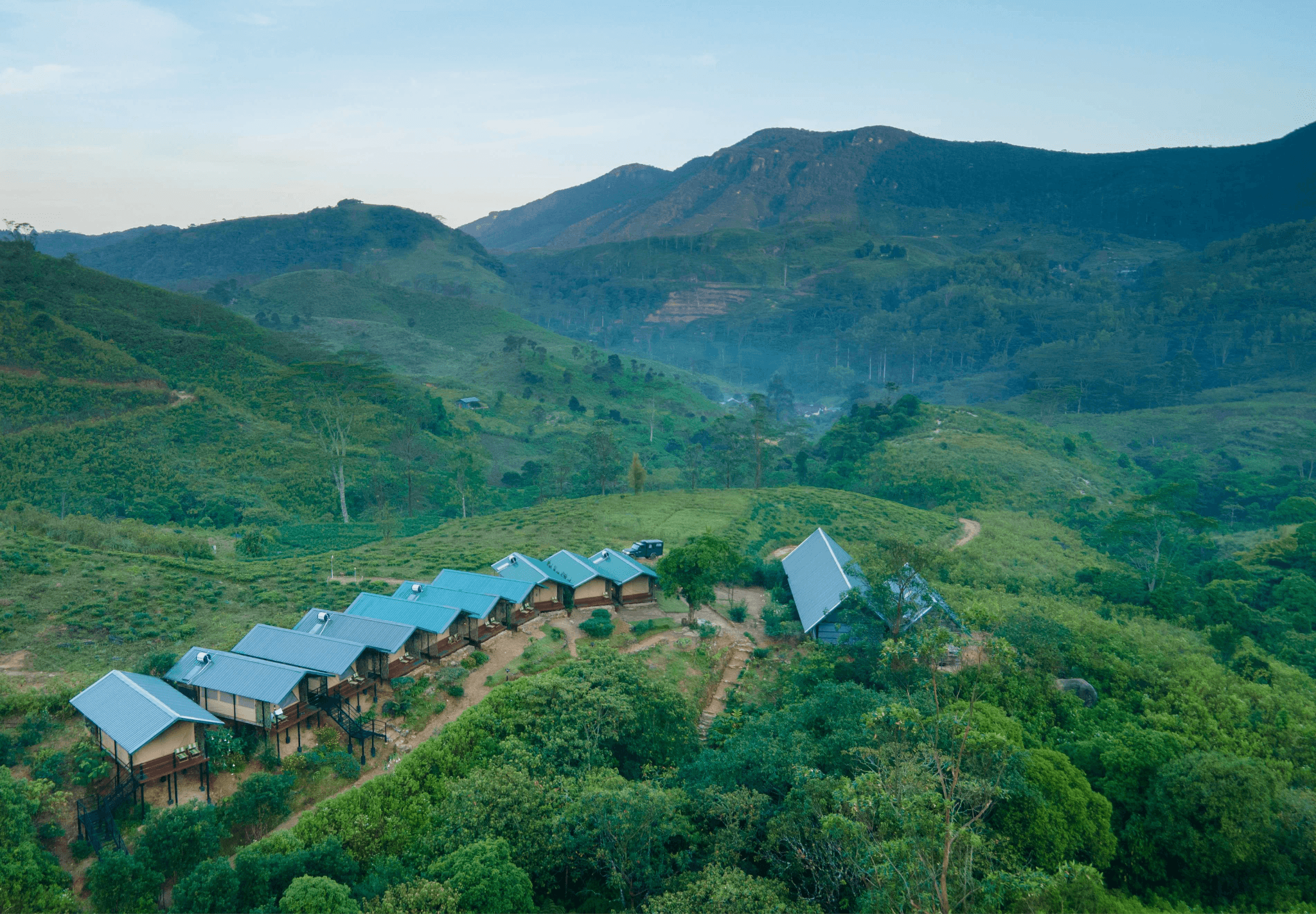
A morning or evening on the birdwatching trail is one of the simpler ways to spend a few hours at Wild Glamping Knuckles, and one of the better arguments for staying inside the reserve rather than passing through it. If you’re planning a trip built around the Knuckles’ birdlife, we can help you time it against the rest of your stay.
Blog
Related Articles