

Pick up a packet of Ceylon tea and you’ll usually find a string of letters somewhere on the label: OP, BOP, FBOP, and others. Ceylon tea grades look like a code, but they’re really just a description of the leaf itself, its size, its shape, and how it was processed. This guide breaks down what those letters actually mean, which matters more than usual if you’re staying somewhere that grades its own tea in front of you.
Why Ceylon Tea Is Graded in the First Place
Grading has nothing to do with ranking one tea as better than another. It’s a description of leaf size and appearance, decided during processing rather than assigned afterwards as a quality score. A large, whole, wiry leaf and a small, broken particle can both come from the very same harvest; they’re simply sorted apart once the leaf has been rolled and dried, because different leaf sizes brew at different speeds and produce different strengths of tea.
That distinction is worth holding onto before looking at the individual grades below. A whole-leaf grade isn’t automatically superior to a broken one; it’s simply a different style of tea, suited to a different kind of cup.
Ceylon Tea Grades: The Basic Categories
These fall into three broad groups, based on how much the leaf has been broken down during processing.
Whole Leaf Grades
- OP (Orange Pekoe): long, wiry, largely intact leaves. Brews a lighter, more delicate cup, and takes a little longer to infuse than smaller grades.
- OPA (Orange Pekoe A): similar to OP but with a slightly larger, bolder leaf.
- FOP (Flowery Orange Pekoe): whole leaf tea that includes some of the tea plant’s tips or buds, adding a touch more aroma and complexity to the cup.
Broken Leaf Grades
- BOP (Broken Orange Pekoe): the leaf has been broken into smaller pieces during processing. This is one of the most widely produced Ceylon grades, and it brews faster and stronger than a whole-leaf grade.
- FBOP (Flowery Broken Orange Pekoe): a broken grade that, like FOP, includes some tips, giving a fuller-bodied cup than a standard BOP.
Fannings and Dust
- BOPF (Broken Orange Pekoe Fannings): smaller particles again than BOP, producing a quick, strong infusion. This is the kind of tea most often found in tea bags.
- Dust: the finest grade of all, valued for how fast and strongly it brews rather than for delicacy. Despite the name, it isn’t a lesser tea, just a different, more practical style suited to a quick, robust cup.
A Few More Terms Worth Knowing
Beyond the letter codes, a handful of other words turn up regularly on Ceylon tea packaging and in tasting notes:
- Pekoe: refers to the bud and the first two young leaves of the tea plant, the part most prized for flavour and considered the base standard many grades are built from.
- Tips: the small, silvery or golden buds sometimes included in a grade. More tips generally means a softer, more aromatic cup.
- Orthodox processing: the traditional method of rolling and drying leaves largely by hand or gentle machine, generally used for whole leaf and broken leaf grades.
- CTC (Crush, Tear, Curl): a mechanical processing method that produces small, uniform particles, common in grades destined for tea bags rather than loose-leaf brewing.
Seeing Grading for Yourself
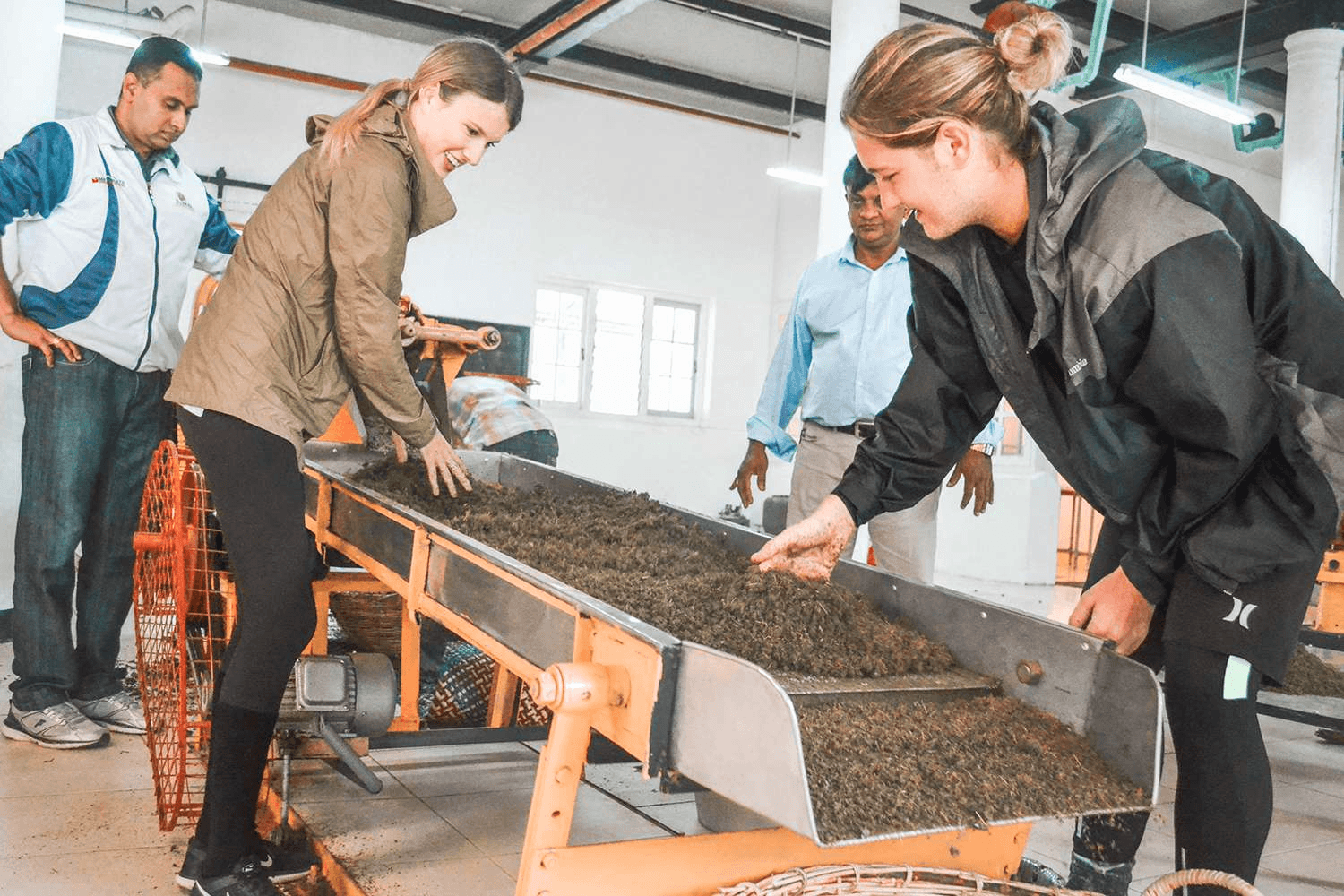
At Tea & Experience Factory Mandaramnuwara, grading isn’t just a term to learn from a label. It’s one of the actual steps guests take part in during the leaf-to-cup experience, alongside plucking, weighing, rolling, fermenting, withering, and packaging, inside a factory that has genuinely operated since the late 1800s and still runs on a scaled-down basis today. Knowing your way around Ceylon tea grades beforehand makes that hour on the factory floor considerably more interesting: you’re not just watching tea get sorted, you can actually follow what’s happening and why.
It’s one of the more distinctive things a tea hotel in Sri Lanka can offer: not a display about how tea is made, but the real, working process, with guests grading a handful of it themselves.
Join the Next Harvest

Understanding the terms is one thing; watching the grading happen in front of you is another. At Tea & Experience Factory Mandaramnuwara, that’s part of the full leaf-to-cup experience, alongside plucking, weighing, rolling, fermenting and packaging, inside a factory that’s still genuinely operating today. Stay in one of the estate-themed Deluxe or Family rooms, or the dormitory if you’d rather keep it simple, and eat at Engine Yard Restaurant between sessions on the factory floor. Contact us to plan your stay.
Blog
Related Articles