

Set in the quiet village of Mandaramnuwara in the Nuwara Eliya district, Tea & Experience Factory Hotel gives new life to the former Kabaragalla Tea Factory.
The building was part of Sri Lanka’s tea industry long before it became a hotel. It was used for tea production, connected to the estates around it, and later remained unused after factory operations ended.
The hotel’s story is closely tied to its factory past. To understand the property today, it helps to look at the growth of tea in Ceylon, the role of Kabaragalla Tea Factory, and how the building was later restored.
The Rise of Ceylon Tea
Tea became one of Ceylon’s main plantation crops during the British period. Before tea became dominant, coffee was the main crop in the highlands. When coffee disease damaged the industry in the 1870s, many estates began moving towards tea as a more reliable crop. This shift changed the future of the hill country, with tea estates, factories, transport routes, and trading systems becoming part of daily life.
The first tea plant was brought from China in 1824 and planted at the Royal Botanical Gardens in Peradeniya for trial purposes. More tea plants later came from Assam and Calcutta. In 1867, James Taylor began commercial tea cultivation at Loolecondera Estate near Kandy, a moment often linked with the start of Ceylon’s tea industry.
Kabaragalla Tea Factory belonged to this wider period of tea production. It was one of many factories connected to estate work, processing, auctions, and export.
The Old Kabaragalla Tea Factory
Before it became Tea & Experience Factory Hotel, the building operated as Kabaragalla Tea Factory.
The factory was established in the late 1800s, during a period when tea production was expanding across Ceylon’s hill country. During this period, tea estates needed factories close to the fields so that freshly plucked leaves could be processed quickly. Kabaragalla Tea Factory served this purpose for the tea estates around Mandaramnuwara.
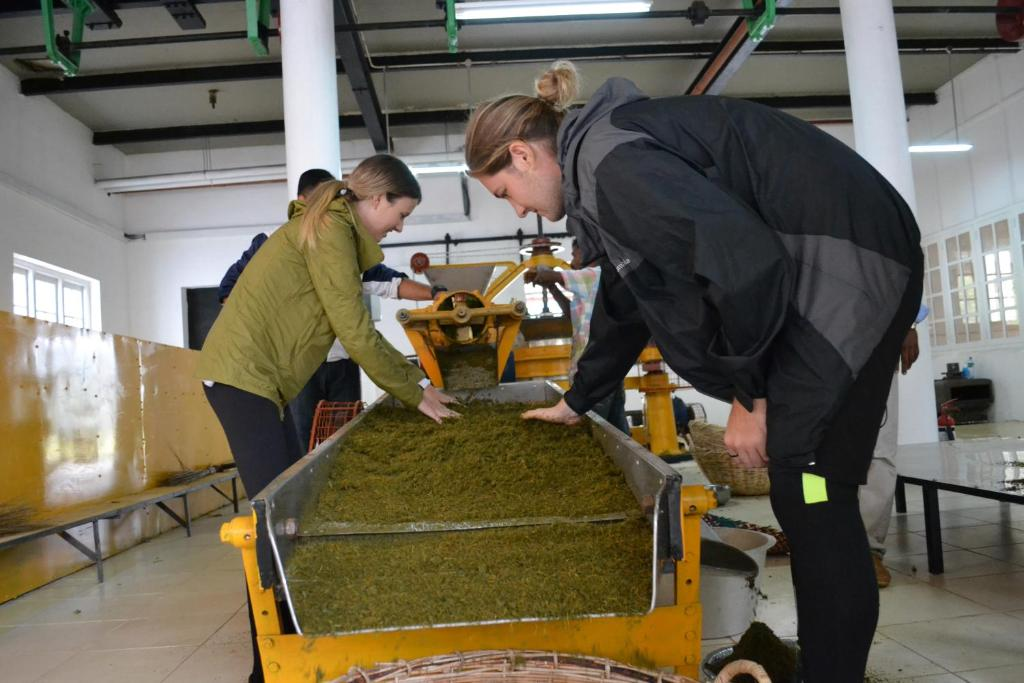
Fresh tea leaves were brought in from the surrounding estates soon after plucking. The leaves then moved through several stages, usually including withering, rolling, fermentation, drying, sorting, and packing. Each stage affected the final quality of the tea.
The work inside the factory depended on timing and consistency. Leaves had to be handled carefully after they arrived, as delays could affect freshness and flavour.
Once the tea was processed and packed, it began the next stage of its journey, leaving Mandaramnuwara for buyers, auctions, and overseas markets. In this way, the work done at Kabaragalla Tea Factory was part of a much larger tea trade that linked Sri Lanka’s hill country with Colombo and the wider export market.
Kabaragalla Tea Factory continued to operate for many years before closing in 1991. After its closure, the building remained unused for nearly three decades.
A Restored Factory in Mandaramnuwara
After years of disuse, the old factory was restored and opened as Tea & Experience Factory Hotel in 2019.
The opening took place on 30 July, the same date of the first Colombo Tea Auction in 1883, at which Kabaragala tea fetched the highest price.
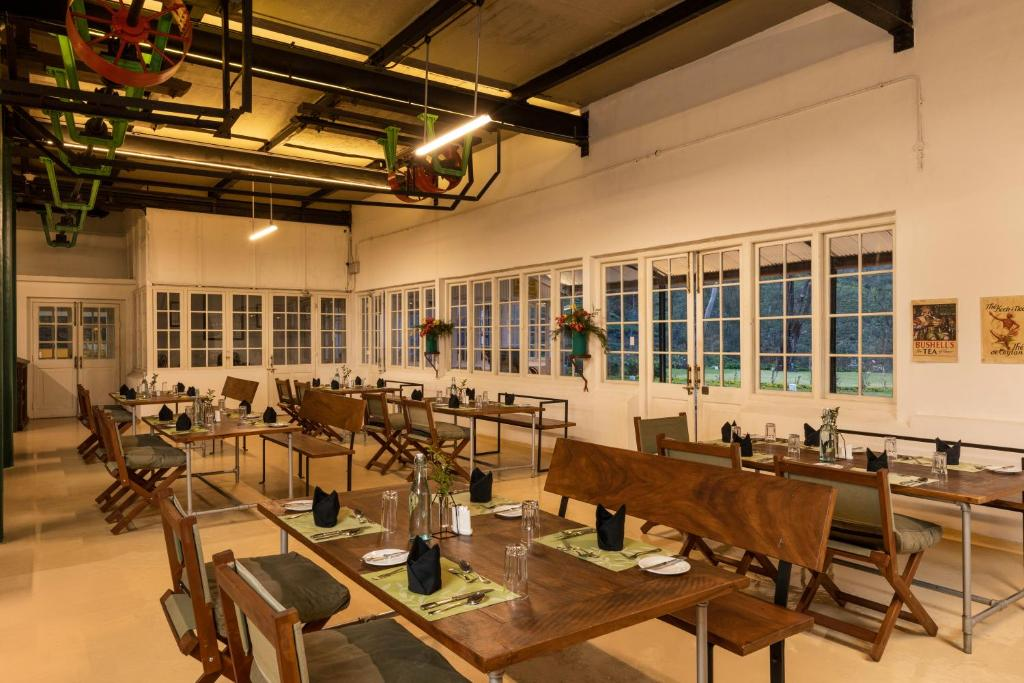
The restoration gave the old factory a new use while keeping its tea country identity close. The building’s shape, setting, and history help define the way the hotel is experienced today.
Among Mandaramnuwara hotels, this gives the property a distinct place. Its character comes from the building’s past, the village around it, and the long presence of tea in Sri Lanka’s hill country.
The Leaf-to-Cup Tea Experience
The leaf-to-cup tea experience is one of the clearest ways this history is shared with guests.
Guided by a resident naturalist/tea expert, the experience follows the journey of tea from the plant to the cup, with clear explanations of the history of the factory and the basic steps behind tea production. Guests learn about plucking, handling, preparation, and tasting, while also seeing how each stage connects back to Mandaramnuwara’s tea-growing past.
For travellers, this gives useful context to the building they are staying in. A tea factory was not only a place where leaves were received. It was where the quality, flavour, and final form of the tea were developed through careful work.
Learning this process inside a restored tea factory makes the setting easier to understand. The experience connects the fields, the building, and the finished cup in a simple way.
Plan Your Stay in Mandaramnuwara
Tea & Experience Factory Hotel feels most interesting when seen through its past. The former Kabaragalla Tea Factory is no longer a working factory, but its past is still part of the stay. The restored building still carries the scale, structure, and character of its factory years, while the tea experiences give guests a closer look at the work that once defined this part of Mandaramnuwara. For travellers who want to stay in a place with a real link to Sri Lanka’s hill country history, this restored factory offers a quiet link to the people, places, and traditions behind Ceylon tea.
Blog
Related Articles