

August 21, 2026
Why the Knuckles Range Still Feels Wild When So Much of Sri Lanka’s Highlands Don’t

Most of Sri Lanka’s hill country wears its history on its slopes. Terraced tea bushes, neat estate bungalows, and manicured hillsides tell you, at a glance, that this land was shaped for a purpose. The Knuckles mountain wilderness tells a different story. Drive into it and the terraces stop. What’s left is forest, folded peaks, and a landscape that never quite got reorganised the way the rest of the highlands did.
What Happened to the Rest of the Highlands
The transformation of Sri Lanka’s central highlands is a 19th-century story, and it’s a thorough one. When the British arrived, they found highland terrain that was cool, wet, and, as it turned out, ideal for growing tea. Over a few decades, huge stretches of what had been natural forest and grassland around Nuwara Eliya, Ella, Haputale, and the wider hill country were cleared and terraced into plantations, with factories, rail lines, and worker housing built to support them. It’s the reason the hill country looks the way it does today: a genuinely beautiful landscape, reshaped almost entirely around a single crop.
The Knuckles sat inside that same colonial economy, in the same wet, cool highland belt, and still ended up looking almost nothing like its neighbours.
What Kept the Knuckles Mountain Wilderness Intact
The short answer is terrain. The Knuckles range earned its name from a cluster of steep, folded peaks that, from certain angles, resemble a clenched fist, and that ruggedness made large-scale plantation development difficult in a way it simply wasn’t in the gentler, more accessible hill country further south. Tea, cardamom, and other cultivation did take hold around the range’s edges and lower slopes, and it remains a real part of the local economy in the surrounding Kandy and Matale districts today. But the interior of the massif, the steep, cloud-wrapped core that gives the range its character, was never converted at anything like the scale seen in Nuwara Eliya or Ella. Large parts of it simply stayed as old-growth forest, because there was no practical way to terrace it.
It’s why the range still behaves the way it does: unpredictable weather rolling in without much warning, dense cloud forest closing in around the trails, and a landscape that feels like it’s setting the terms rather than accommodating visitors.
A Forest Recognised for What It Protects
The Knuckles Conservation Forest is one of three protected areas that together make up the Central Highlands of Sri Lanka UNESCO World Heritage Site, inscribed in 2010 alongside the Horton Plains National Park and the Peak Wilderness Protected Area. Between them, these three sites protect much of what remains of Sri Lanka’s original montane forest, the same forest type that once covered most of the highlands before large-scale cultivation reshaped the rest of it.
The property’s own figures give some sense of what that forest holds: 128 recorded bird species, 17 of them found nowhere else on earth.
Cultivated Hills, Untamed Peaks
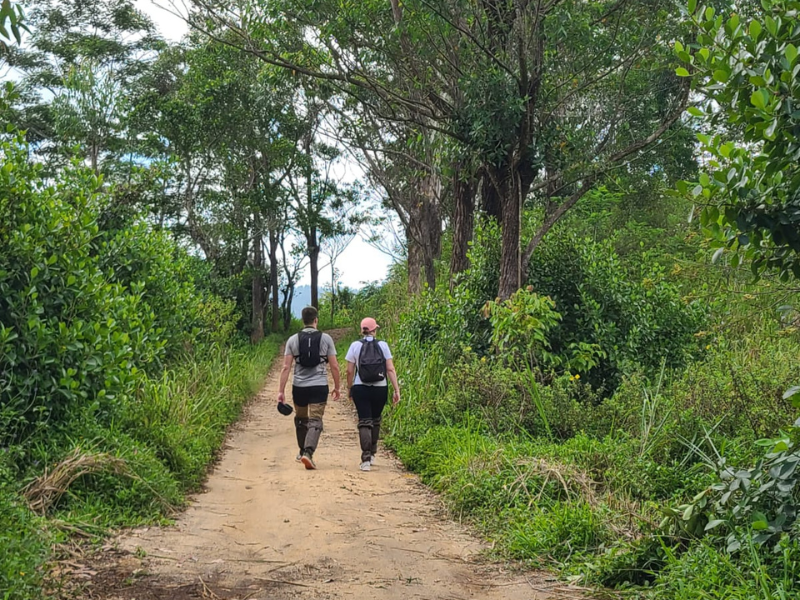
Nuwara Eliya and Ella are beautiful in their own right, and neither is short of hiking or scenery. What sets the Knuckles apart is what the landscape is doing underneath all that beauty. Tea country is cultivated: rows of bushes, graded paths, a visible human hand on almost every hillside. The Knuckles isn’t laid out for anyone. Trails climb through unmanaged forest rather than between plantation rows, and reaching Wild Glamping Knuckles itself means a 4×4 transfer over rough, narrow, winding ground for the final stretch, not a paved driveway.
That roughness is part of the appeal rather than something to get past. It’s the same terrain that kept the range from being terraced in the first place, and it’s still shaping what a visit here actually feels like: slower, wetter, wilder, and considerably quieter than the tea country further south.
Staying Inside It, Rather Than Just Visiting
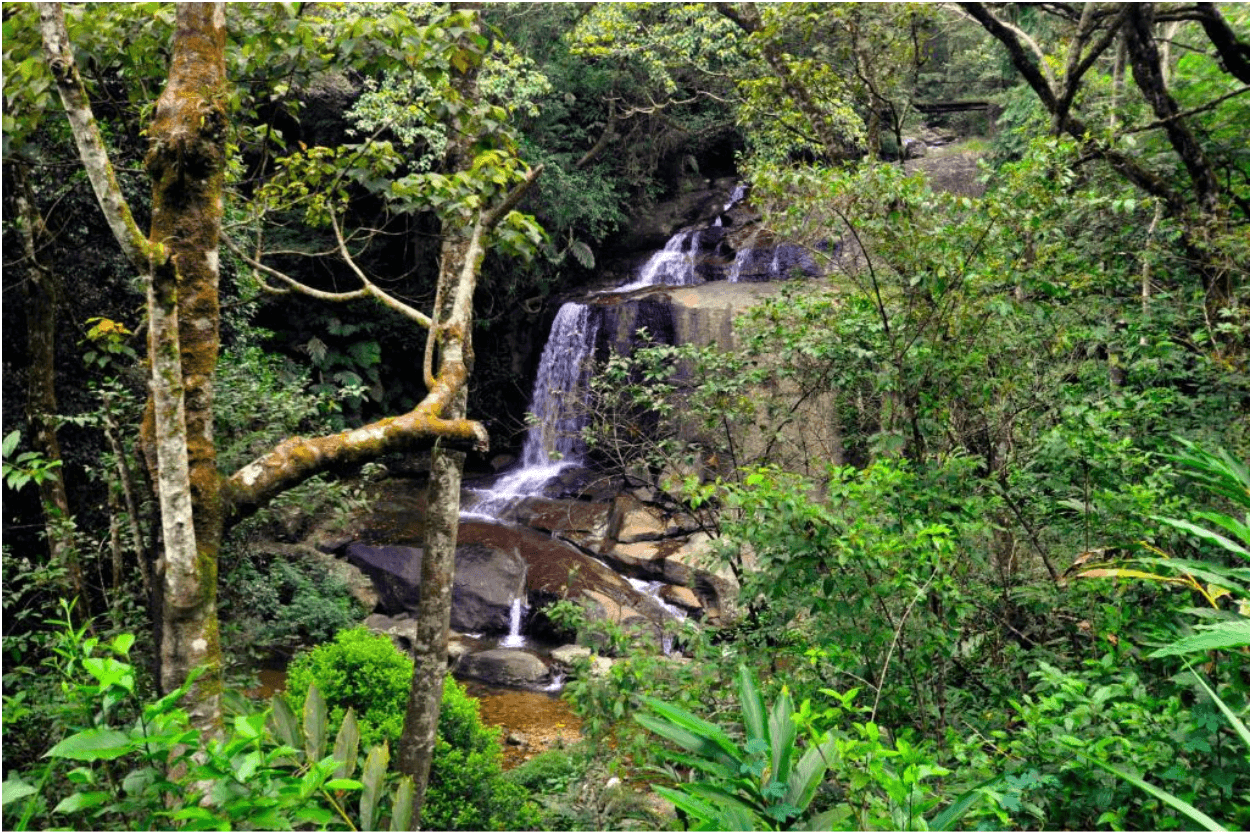
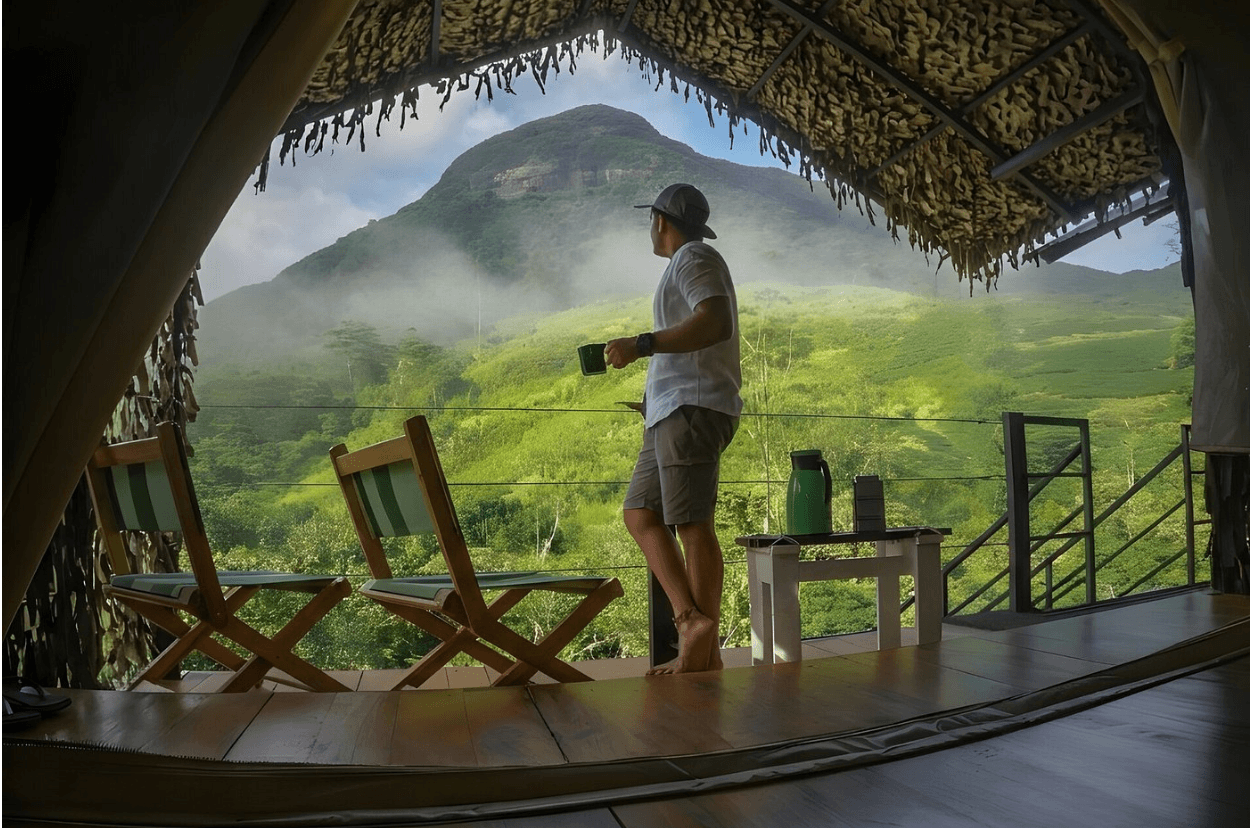
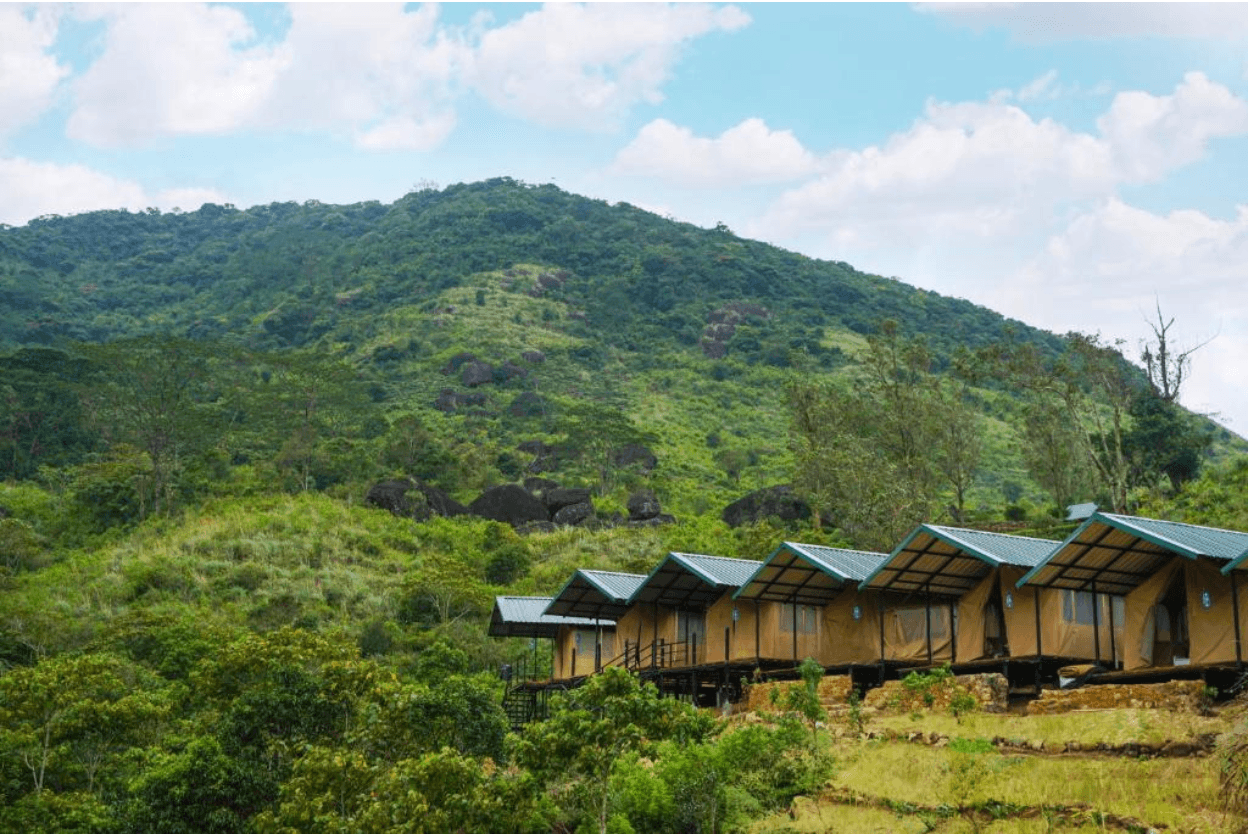
Most hotels near the Knuckles mountain range sit on the edges of the reserve, within driving distance of the trails rather than inside them. Wild Glamping Knuckles is built the other way round. The tents sit within the wilderness itself, off-grid beyond solar-powered lamps and a generator running for limited hours, with direct access to trails and experiences like the Kotaganga waterfall walk and the high Knuckles trek starting a short walk from the tents rather than a drive away.
A landscape that resisted large-scale development for a century and a half is simply better experienced from inside it, waking up in the forest rather than driving into it for the afternoon.
Head Into the Knuckles
The Knuckles mountain wilderness stayed wild because the land itself resisted being anything else, and that’s still what makes it worth the winding drive in. If a trip built around genuine forest, quiet, and a bit of weather sounds like your kind of stay, get in touch and we’ll help you plan it.
Blog
Related Articles