

August 21, 2026
What Weligama Feels Like When the Season Slows Down

Somewhere around May, the crowds thin out first, then the queues at the surf schools, then the line for a table at sunset. The Weligama off-season doesn’t arrive all at once. It settles in gradually, over a few weeks, until the bay belongs mostly to the people who live beside it.
A Different Kind of Sky
The southwest monsoon rolls in from around May and doesn’t fully let go until September, and it changes the light more than it changes the day. Mornings still tend to open clear and warm, the sea a flat, glassy grey-green before the wind picks up. By afternoon, cloud builds along the horizon, sometimes breaking into a short, heavy downpour that clears as fast as it arrived. The air stays thick and warm throughout, never cold, just heavier, and the humidity settles into everything from the towels to the evenings.
None of this looks like a postcard of Weligama in December. It looks like a working coastline in the middle of its own weather, which is a different thing to watch from a veranda with a drink in hand.
Weligama Off-Season Mornings: Where the Waves Still Break
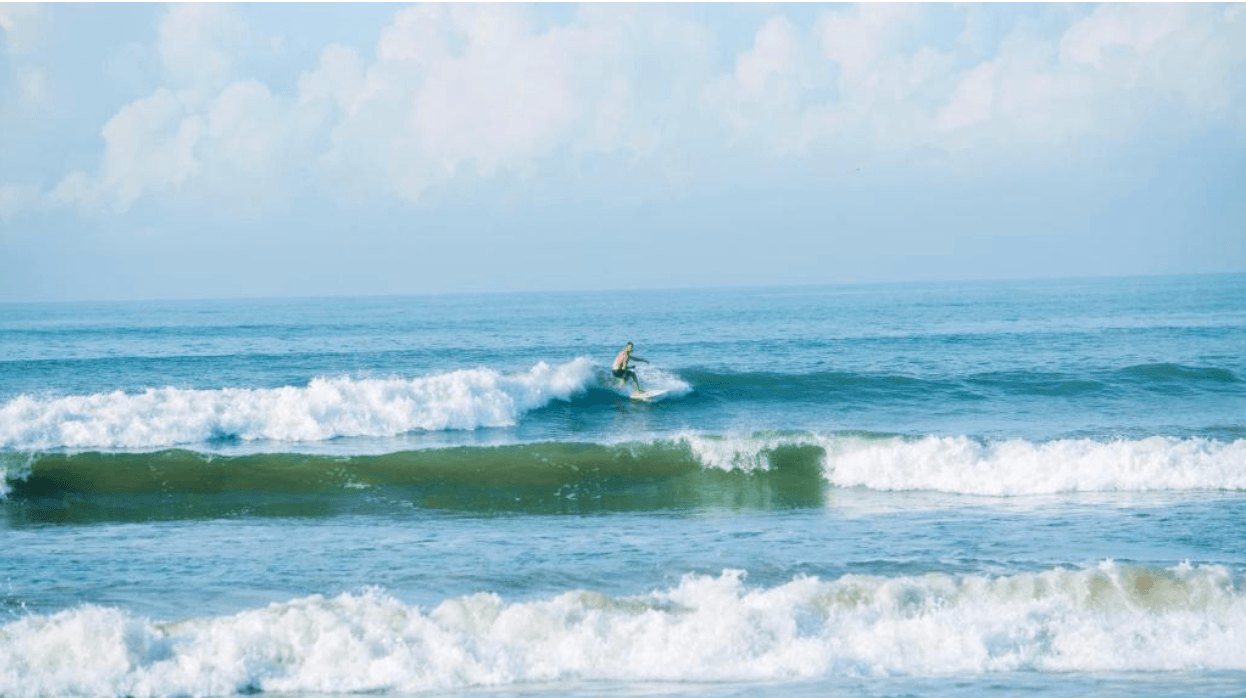
The water off Weligama holds its warmth all year, somewhere in the high twenties, so the sea itself never really changes character even when the sky does. Mornings, before the wind builds, still bring workable little waves rolling over the same sandy bottom that makes this beach forgiving for beginners in the first place. There’s no queue for a board, no crowd to share a wave with, just an early tide and whoever else decided to get up for it.
That’s really the shape of a Weligama off-season morning: smaller, calmer, entirely unhurried, and still, somehow, a proper surf.
A Quieter Rhythm on the Sand
Fewer visitors means the beach reverts, a little, to the people who use it every day rather than a handful of weeks a year. Fishing boats come and go at their usual hours. Footprints along the sand belong to locals walking dogs or checking nets rather than tourists working through a bucket list. Music drifts from a radio somewhere down the beach rather than a resort speaker system, and the smell of someone’s evening cooking fire carries further than it would in a busier month. It’s a smaller, more local version of the same stretch of coast, and it’s easy to have long conversations with people who otherwise wouldn’t have the time.
The Pool Becomes the Bay
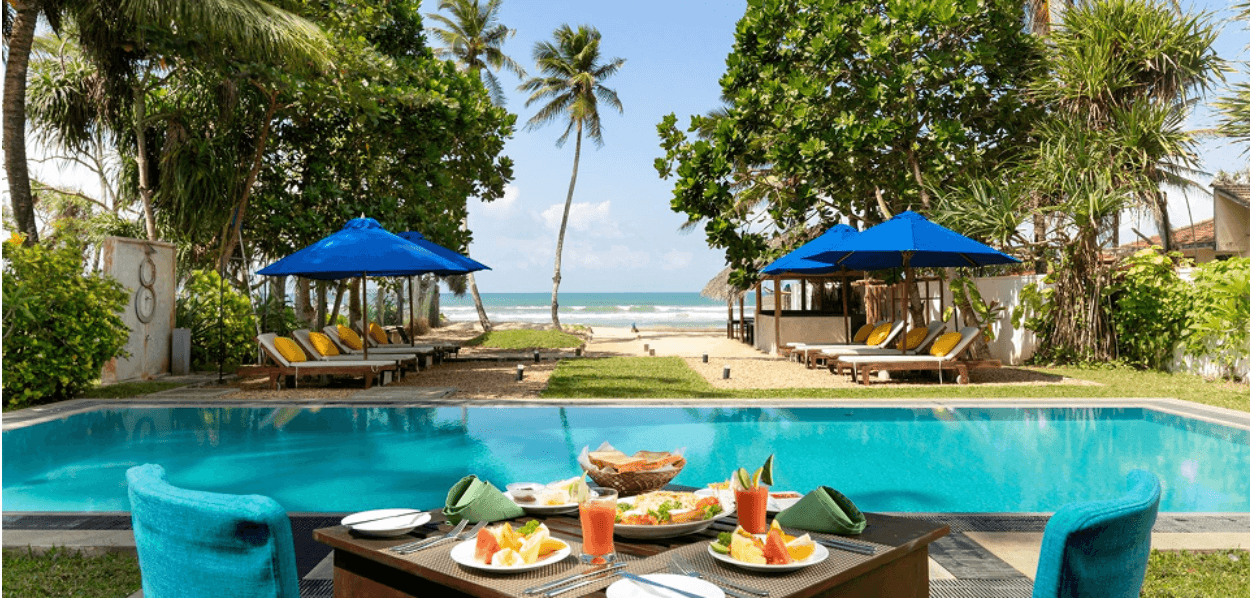
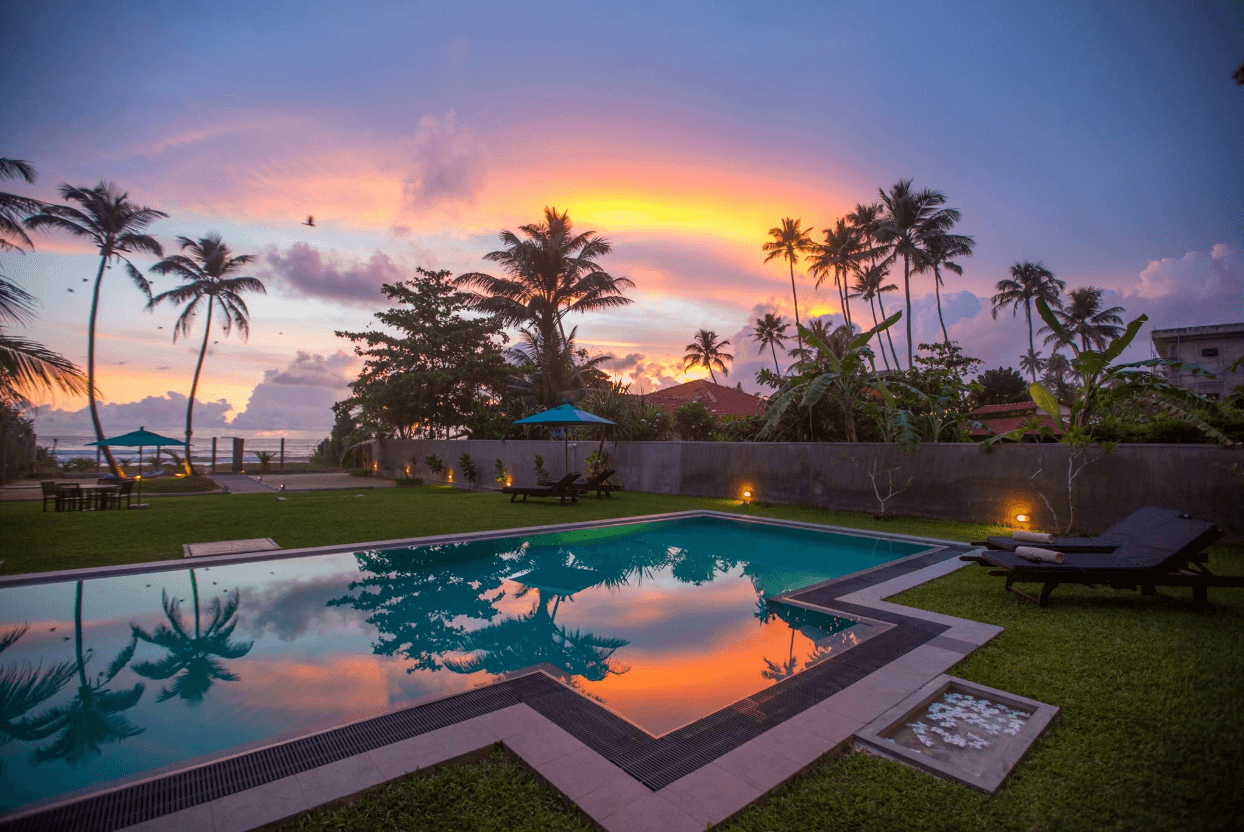
Parangi’s pool sits right alongside Weligama Bay, close enough that on a calm day it’s hard to say where one ends and the other begins. In the off-season, when the sea turns choppier or a squall rolls through, that pool stops being a backup and becomes the main event: still, warm, sheltered, and looking straight out at the same water that’s currently too rough to swim in properly. It’s one of the small, practical advantages of a beachfront stay that only really shows itself once the weather turns.
Evenings at Café Surf
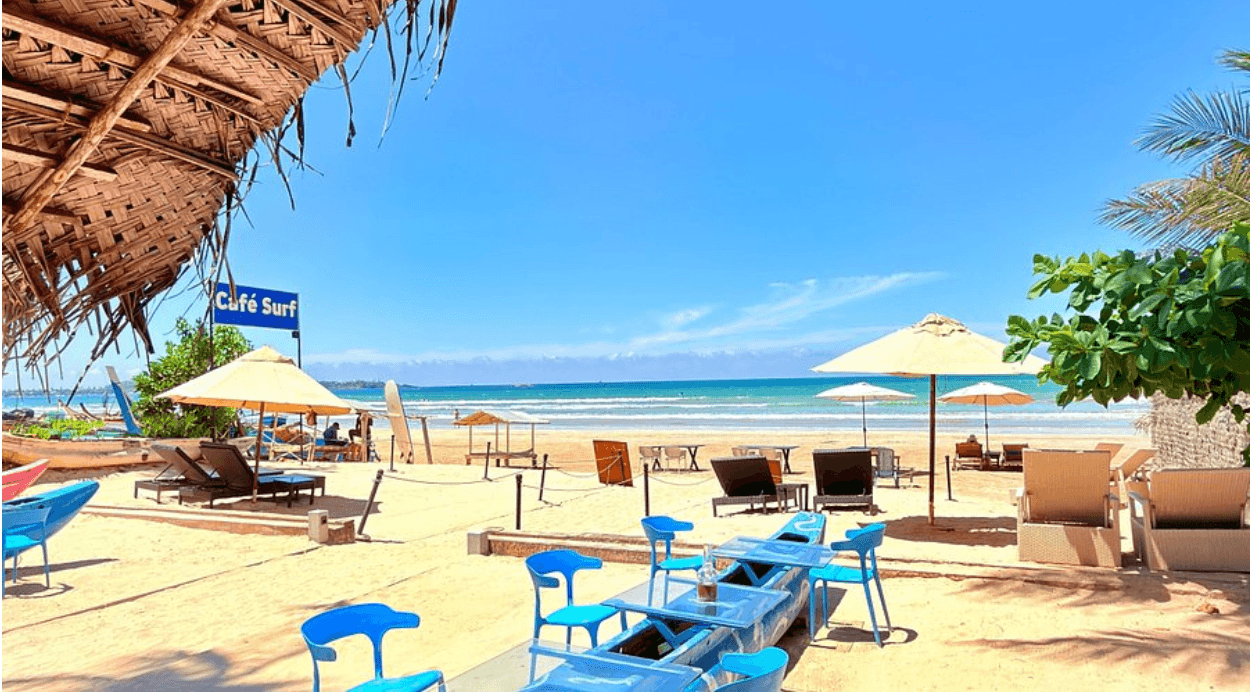
Rain in the evening doesn’t cancel dinner here, it just changes the view. Café Surf Weligama sits close enough to the water that a passing shower becomes part of the atmosphere rather than a reason to move inside, seafood and cocktails served while the bay goes from grey to gold as the cloud clears. It’s a quieter room in these months, fewer tables filled, easier conversation, the kind of evening that doesn’t need much else added to it.
Your Own Corner of the Bay
None of this needs peak season to work. If anything, it works better without it, warmer water underfoot, a quieter table at dinner, and a version of Weligama that belongs, for a while, to whoever’s actually here. If a slower hotel in Weligama, Sri Lanka sounds like your kind of trip this year, we’d be glad to help you plan it around the quiet months rather than in spite of them.
Blog
Related Articles