

June 15, 2026
Tissamaharama and Kataragama: Exploring the History Behind Two Sacred Southern Towns

Tissamaharama and Kataragama sit close to each other, but each town tells a different part of the island’s story. Tissamaharama is tied to the ancient Kingdom of Ruhuna, Buddhist monastic learning, and the agricultural systems that helped southern Sri Lanka grow. Kataragama is one of the island’s most important pilgrimage towns, respected by Buddhists, Hindus, Muslims, and the indigenous Vedda community.
Together, they give visitors a richer reason to spend time in this part of the island.
Tissamaharama: An Ancient Town of Ruhuna
Tissamaharama’s history is closely linked with the Kingdom of Ruhuna, the ancient southern kingdom that played a major role in Sri Lanka’s early political and religious story. The town is believed to have grown under King Kavantissa in the 2nd century BCE, during a time when Ruhuna became an important centre of power outside Anuradhapura.
This region also connects with the story of Prince Dutugemunu, son of King Kavantissa and Queen Viharamahadevi. According to Sri Lankan historical tradition, Dutugemunu grew up in Ruhuna before leading his campaign to unite the island. Because of this, Tissamaharama is more than a stop near Yala, it is part of a wider story about kingship, faith, farming, and early state-building in Sri Lanka.
Today, the town may feel quiet compared to larger cities, but its past remains visible in its stupas, tanks, temples, and paddy fields.
Tissamaharama Raja Maha Vihara: One of Sri Lanka’s Oldest Buddhist Temples
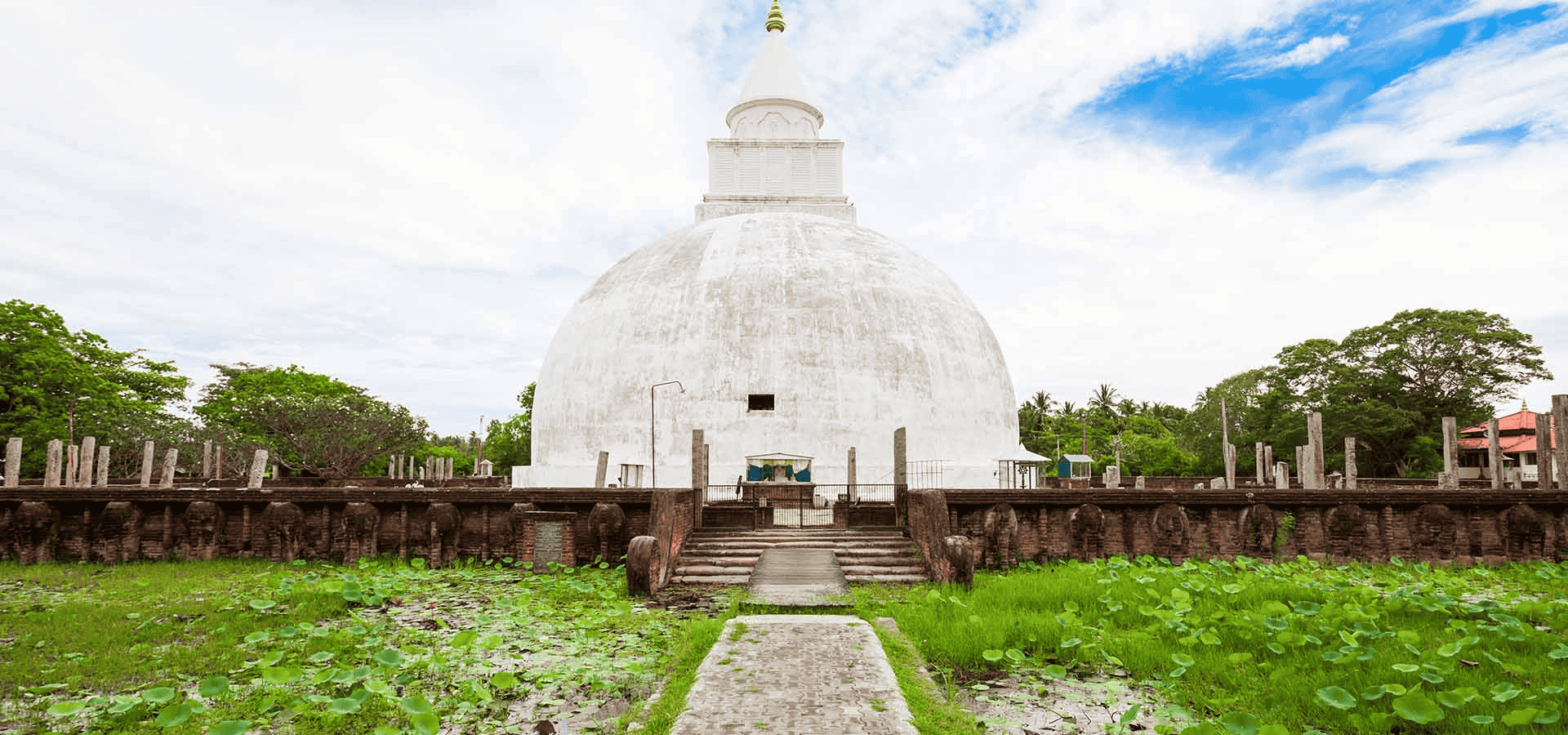
One of the most important landmarks in the town is Tissamaharama Raja Maha Vihara, an ancient Buddhist monastery believed to have been established during the reign of King Kavantissa. The site became one of the leading Buddhist centres in southern Sri Lanka and is linked to the spread of Buddhism after the arrival of Arhant Mahinda Thera.
The large white stupa is one of the most recognisable sights in Tissamaharama. In earlier centuries, the monastery was known as a centre of Buddhist learning, attracting monks and receiving royal support through land grants. Historical records also point to renovations by later kings, showing that the site remained important across different periods of Sri Lankan history.
For travellers, the temple gives a clear sense of how Buddhism shaped everyday life in the south. The stupa is still a place of worship, so visitors will often see devotees offering flowers, lighting lamps, or walking quietly around the sacred structure.
Tissa Wewa and the Farming Heritage of the South
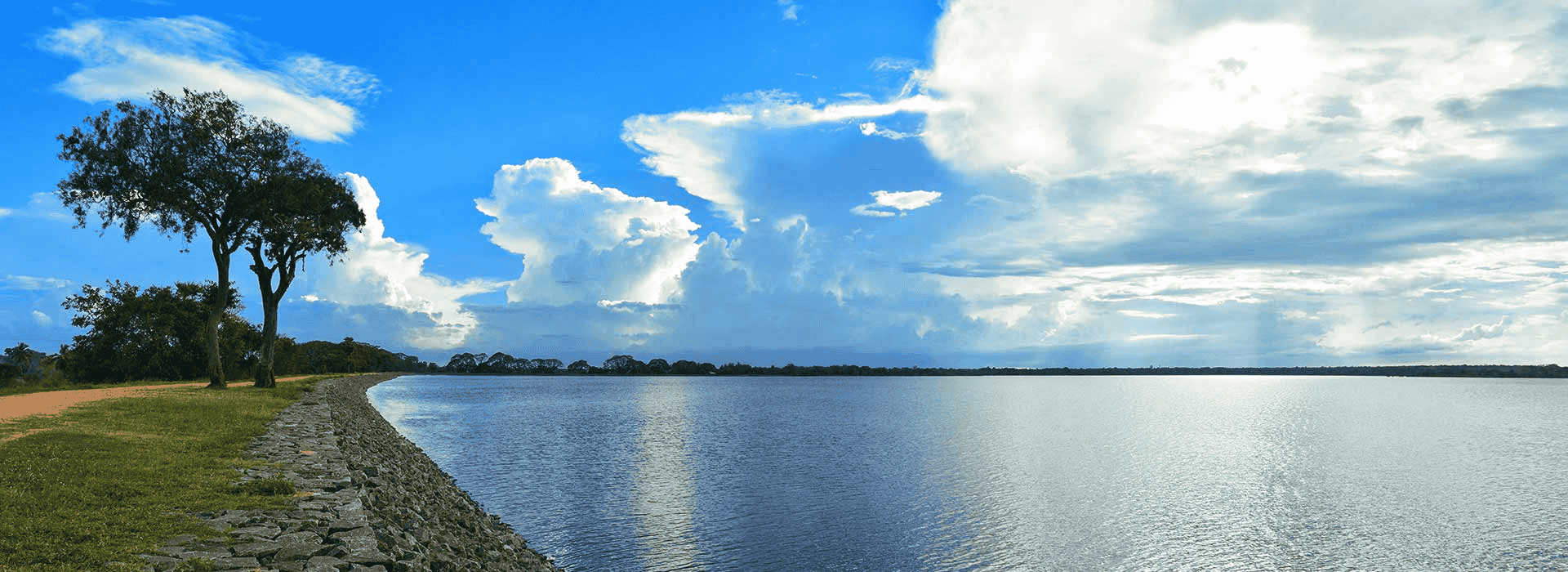
Tissamaharama’s history is also tied to water. Ancient Sri Lankan kingdoms depended on irrigation, and tanks such as Tissa Wewa helped support agriculture, settlements, and religious life. King Kavantissa is linked with improvements to Tissa Wewa, which supported both the monastery and the surrounding farmlands.
This is an important detail because it explains why paddy fields are still such a strong part of the town’s identity. The open fields, water channels, birds, and village paths around Tissamaharama are not only scenic. They are part of a long agricultural tradition that shaped how people lived in the dry zone.
For guests staying near Kithala Resort, this history is easy to see. The resort itself looks out across paddy fields, and the rural setting reflects the same farming culture that has supported this region for centuries.
Kataragama, Sri Lanka: A Multi-Religious Pilgrimage Town in the South
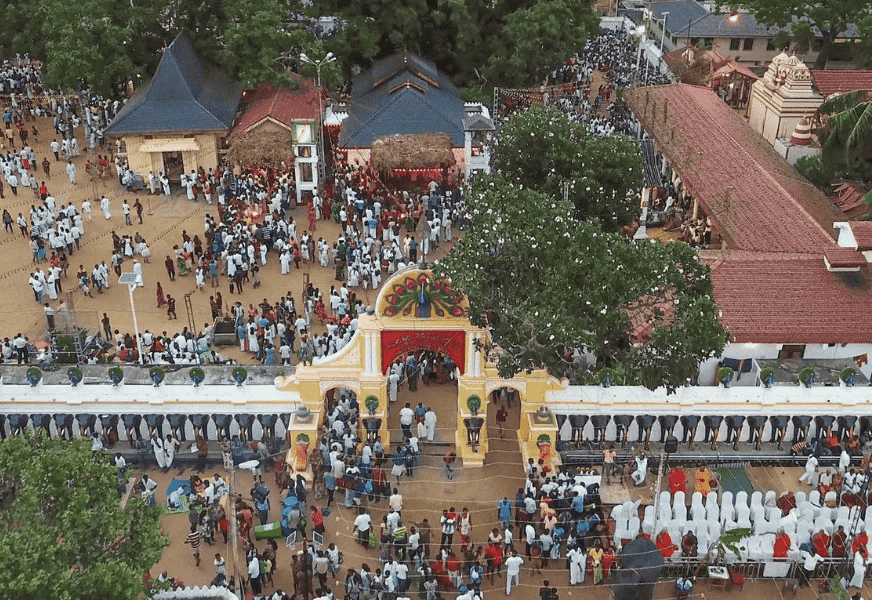
Around 20 kilometres from Tissamaharama, Kataragama has a very different but equally important story. It is one of Sri Lanka’s most respected pilgrimage towns and is sacred to Buddhists, Hindus, Muslims, and the Vedda community.
The town’s main shrine is dedicated to God Kataragama, a guardian deity honored by many Sinhala Buddhists. Hindu devotees worship him as Lord Murugan, also known as Skanda. Muslim tradition also has a place here, with devotion connected to al-Khidr. Vedda traditions add another older layer to the town’s spiritual identity.
This mix of beliefs makes Kataragama one of the most unusual sacred towns in Sri Lanka. People come with different prayers, different rituals, and different languages, yet the town continues to bring them together through shared devotion.
Kiri Vehera and Buddhist Kataragama
Kataragama is also home to Kiri Vehera, an ancient Buddhist stupa believed to date back more than 2,000 years. Some traditions link its construction to King Mahasena, and the site is regarded as one of Sri Lanka’s important Buddhist pilgrimage places.
For Buddhist pilgrims, Kiri Vehera is a place for flower offerings, lamp lighting, chanting, and quiet reflection. Its white dome stands close to the Kataragama Devalaya, showing how Buddhist and Hindu worship practices sit near each other in the same sacred town.
This closeness is one reason Kataragama is so important. The town does not tell one simple religious story. It shows how different traditions have lived side by side for generations, sometimes with shared rituals, shared spaces, and shared respect.
The Kataragama Devalaya and Daily Puja
The Kataragama Devalaya is the heart of the town’s daily ritual life. Devotees bring offerings such as fruit, flowers, incense, and coconuts. Many come to ask for protection, healing, success, or guidance. Others visit to give thanks after a vow has been fulfilled.
Daily puja ceremonies are an important part of the Kataragama experience. These rituals are not staged for visitors. They are part of the town’s living faith. Drumming, chanting, lamps, offerings, and the movement of devotees through the temple grounds all create a strong sense of devotion.
Travellers should visit with respect. Shoulders and knees should be covered, shoes must be removed, and quiet behaviour is expected inside sacred spaces. Morning and late afternoon visits are often more comfortable because the heat is lower and the temple grounds are more pleasant to walk through.
The Kataragama Festival: Sri Lanka’s Famous Southern Pilgrimage Event
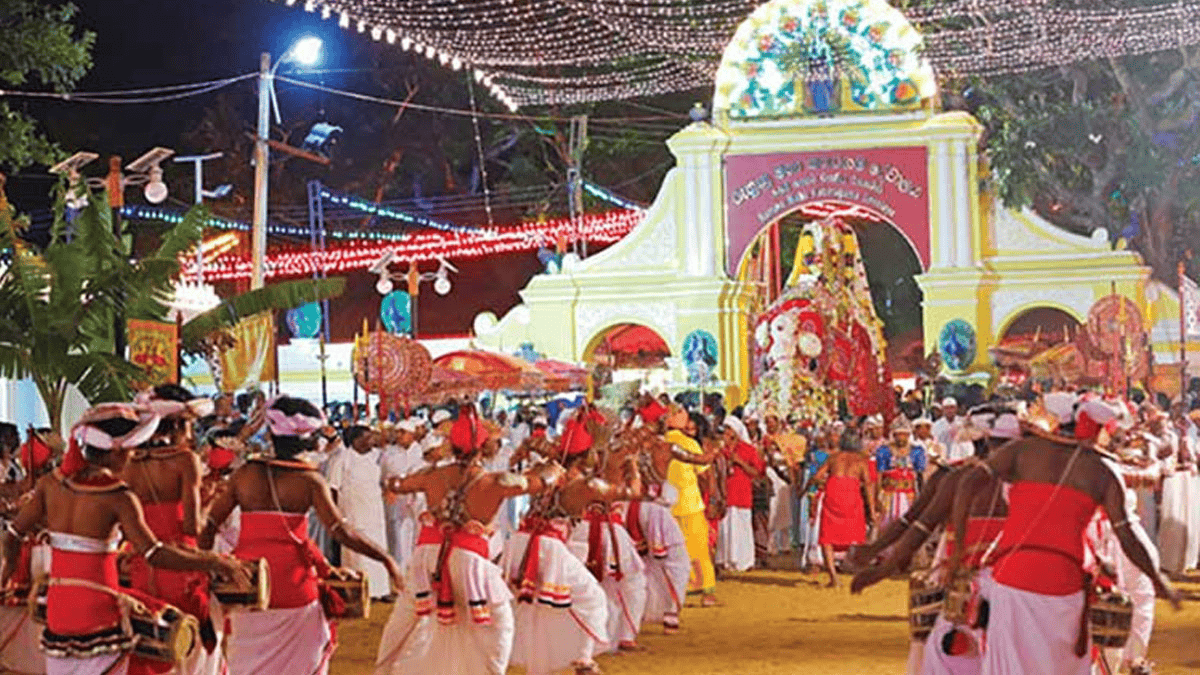
The most important annual event in Kataragama is the Kataragama Esala Festival, usually held in July or August. Processions take place during the Esala season, with rituals, music, dancers, elephants, vows, and thousands of pilgrims gathering in the town.
The festival is deeply rooted in devotion. For some pilgrims, the journey to Kataragama itself is an act of faith. Even today, some devotees walk long distances to reach the sacred town, following an older pilgrimage practice.
For visitors, the festival can be a moving cultural experience, but it is also very busy. Accommodation, transport, and temple visits should be planned early. Travellers should also remember that this is a religious event first. The best way to experience it is with patience, respect, and guidance from someone who understands the customs.
Sithulpawwa: A Longer Cultural Visit from Kataragama
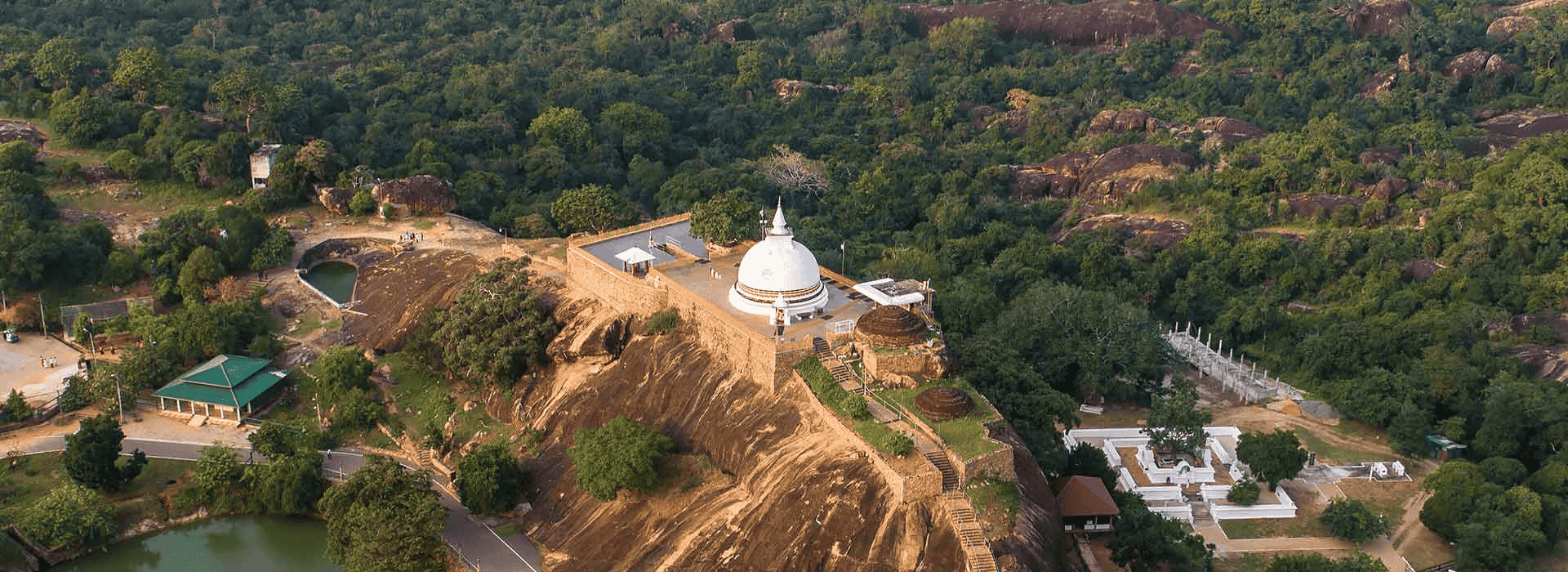
For those who want a deeper historical route, Sithulpawwa Rajamaha Viharaya can be added to a longer visit. Located near Yala National Park, Sithulpawwa is an ancient Buddhist monastery believed to have been built in the 2nd century BCE by King Kavantissa.
The site is known for rock caves, stupas, inscriptions, and its long connection with monastic life. Its name is often understood as “the hill of the quiet mind,” which suits its role as a place of meditation and Buddhist learning.
Sithulpawwa brings a different kind of history into the journey. While Tissamaharama shows the royal and monastic centre of ancient Ruhuna, and Kataragama shows living multi-faith devotion, Sithulpawwa shows the quieter side of Buddhist practice in the dry zone.
Visiting Tissamaharama and Kataragama from Kithala Resort
Kithala Resort is a hotel in Tissamaharama, very close to both Kataragama and Yala, making it a practical base for travellers who want both culture and wildlife in one stay. We even have a guided cultural tour lasting around two hours. It includes the support of a hotel staff member, making it easier for guests to understand the customs, rituals, and religious importance of the town. The visit can also be extended to nearby temples such as Sithulpawwa for guests who want a longer historical tour.
Light, airy clothing is recommended, with shoulders and knees covered. Since shoes must be removed at sacred sites, socks are useful for comfort. The resort recommends visiting around 8.00 a.m. or 3.00 p.m., when the weather is usually more suitable for walking.
For guests staying at Kithala Resort, Tissamaharama can feel less like a brief stop before safari and more like part of the journey through Sri Lanka’s deep south. With guided cultural experiences arranged from the property, visits to temples, paddy fields, and pilgrimage sites are given more context, helping travellers understand the customs and daily life that still give this region its character.
Blog
Related Articles