

Tissamaharama is often used as a base for Yala National Park and Kataragama, but the area also offers quieter local experiences that help visitors understand everyday life in Sri Lanka’s deep south. One of these is curd making, a food tradition closely linked with buffalo farming, village households and clay-pot storage.
For travellers curious about traditional curd in Sri Lanka, a curd-making experience in Tissamaharama shows the process behind a dish most visitors only ever see on a plate. Don’t expect a slick cooking demo. It’s a slow, everyday process, one families and farming communities in the area have done for generations.
Why Traditional Curd in Sri Lanka Is Linked with Tissamaharama
Buffalo curd is one of Sri Lanka’s most familiar dairy foods. It is usually served in small clay pots and eaten with kithul treacle, honey or jaggery-based syrup. The taste is mildly tangy, creamy and cooling, making it a favourite dessert after rice and curry or spicy food.
Tissamaharama is well placed for this tradition because the surrounding area includes rural land, lakes, paddy fields and farming communities. Buffaloes are part of this wider agricultural setting. Curd making has become one of the local food experiences visitors can learn about during a stay.
Before the curd is ready to eat, the milk must be handled carefully, heated, cooled, mixed with a starter and left to set. This makes the experience more about observing a daily practice than simply tasting a finished dish.
What Is Buffalo Curd?
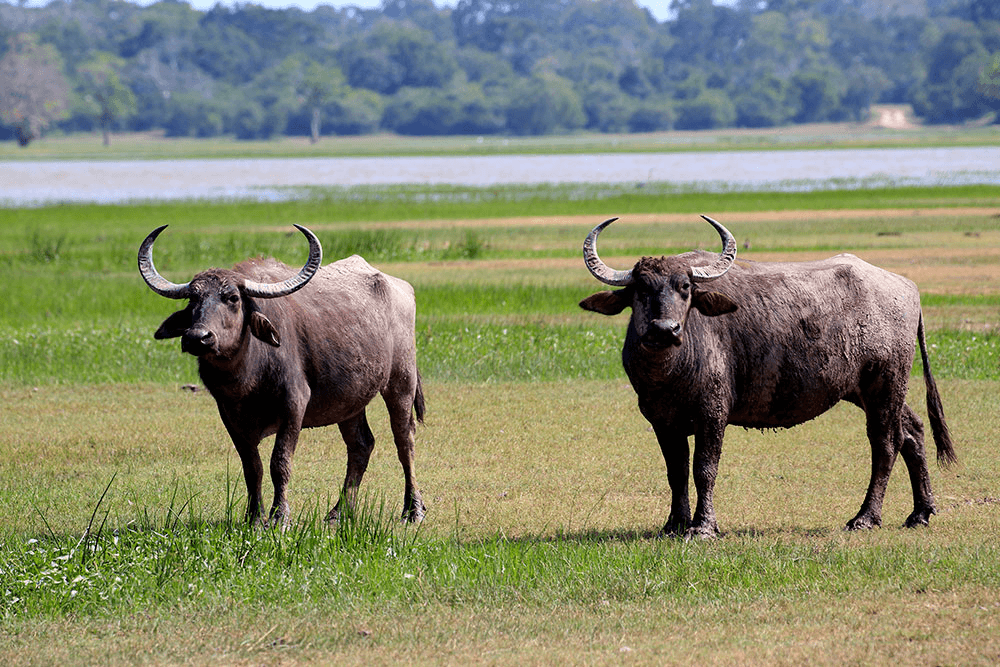
Buffalo curd, often known locally as mee kiri, is made from buffalo milk. Compared with cow’s milk, buffalo milk is richer and thicker, which gives the curd its firm texture and creamy mouthfeel.
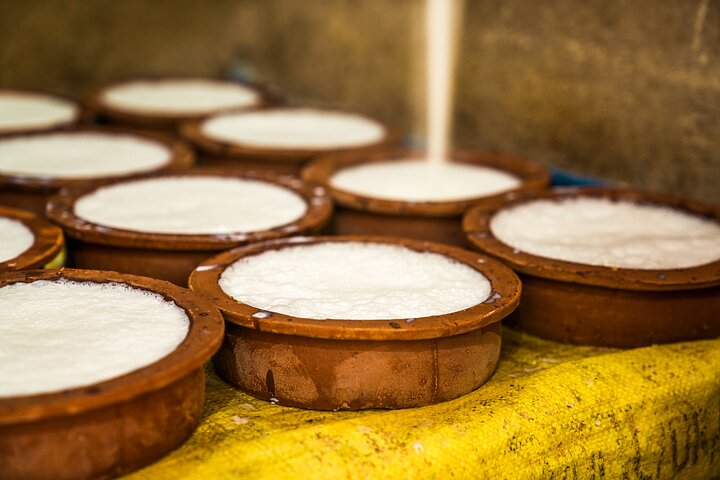
The curd is usually set in clay pots. These pots are not only traditional serving vessels; they also help absorb excess moisture and keep the curd at a pleasant texture. When served with treacle, the sharpness of the curd balances the sweetness of the syrup.
For many Sri Lankans, curd and treacle is a familiar comfort food. For travellers, it is a useful way to understand how local ingredients, farming and household food habits meet in one dish.
What Happens During a Curd-Making Experience?
A curd-making experience can vary depending on the host, timing and location, but the main stages are usually similar.
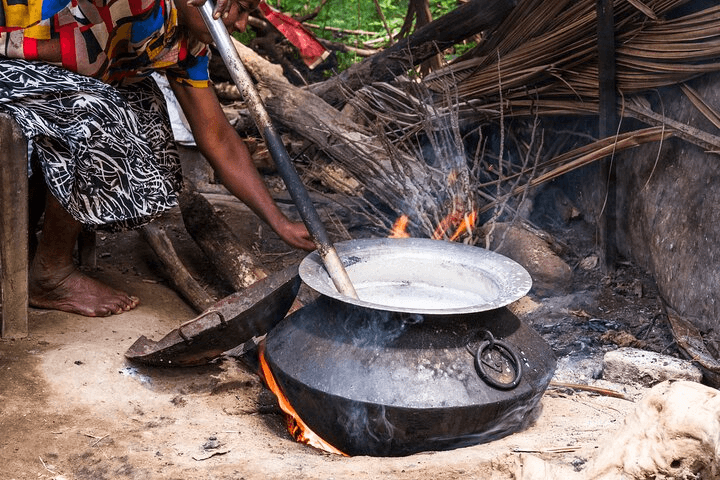
The process often begins with fresh buffalo milk. The milk is strained to remove impurities, then heated to make it suitable for setting. Once heated, it must cool to the right temperature before a small amount of starter curd is added.
The starter contains the live cultures that help the milk ferment and turn into curd. After mixing, the milk is poured into clay pots and left undisturbed for several hours until it sets.
A typical visit may include:
- Seeing how fresh buffalo milk is prepared
- Learning why the milk is heated
- Understanding the role of starter curd
- Watching milk being poured into clay pots
- Hearing how long the curd needs to set
- Tasting the finished curd with treacle
The experience is useful because it shows how few ingredients are needed. The skill lies in temperature, timing, cleanliness and knowing when the milk is ready for the next stage.
Step-by-Step: How Buffalo Curd Is Made
Although each family or producer may have their own method, the basic process is usually as follows.
1. Fresh milk is collected
The quality of the curd begins with the milk. Fresh buffalo milk is valued for its richness, so careful handling matters from the start.
2. The milk is strained
Straining helps remove dust or small particles before heating. Clean handling is important because curd depends on controlled fermentation.
3. The milk is heated
Heating helps prepare the milk for setting. This stage must be watched carefully so the milk does not burn or overflow.
4. The milk is cooled
The milk cannot be mixed with starter curd while it is too hot. It must cool to a suitable temperature, which the maker often judges through experience.
5. Starter curd is added
A small amount of curd from a previous batch is mixed into the milk. This introduces the cultures that help the fresh milk set.
6. The mixture is poured into clay pots
Clay pots are commonly used because they suit the traditional method and help give the curd its familiar texture.
7. The curd is left to set
The pots are kept still while the curd forms. Moving them too early can affect the texture.
8. The finished curd is served
Once set, the curd is usually eaten chilled or at room temperature with treacle.
When Is the Best Time to Experience Curd Making?
Morning is often a good time for food and farming experiences because the day is cooler and local routines are already underway. If the experience includes seeing the early stages of preparation, an earlier start may be more suitable.
Ask the host or hotel team what time is best for the specific visit. Some parts of the process may happen before guests arrive, while others may be explained through demonstration.
If you are planning a Yala safari, avoid placing a curd-making visit immediately after a very early morning unless you have time to rest. A better plan may be to keep the safari and curd experience on separate days, or choose a relaxed afternoon after a slower morning.
How to Taste Curd Like a Local Food Experience
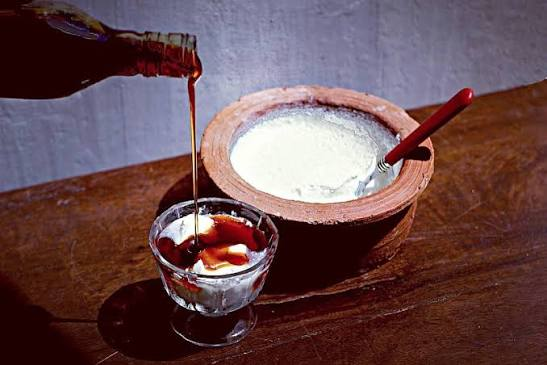
Curd is best tasted slowly. Notice the texture first. Good buffalo curd is usually thicker than ordinary yoghurt and may hold its shape when spooned from the pot.
Then taste it plain before adding treacle. This helps you notice its natural tang and creaminess. After that, add a little treacle and see how the sweetness changes the flavour.
Do not mix too much treacle at once. Many people prefer to add it gradually so each spoonful keeps a balance of sour and sweet.
You can also ask simple questions such as:
- Is this made from buffalo milk only?
- How long does it take to set?
- Are the clay pots reused or made locally?
- How is the starter curd prepared?
- Is the curd usually eaten daily or on special occasions?
These questions can turn a short tasting into a better understanding of local food habits.
Plan a Local Food Experience from Villa Blue Monk

A curd-making visit is a gentle way to understand Tissamaharama through food, farming and local skill. It pairs well with the area’s wider experiences, from Yala National Park and Kataragama to sunset boat rides and quiet time surrounded by nature.
Travellers looking for Villas in Tissamaharama can consider Villa Blue Monk as a calm four-room stay in Tissa, with access to experiences such as traditional curd making, a Yala safari with a naturalist, sunset boat rides and Kataragama visits. Its small villa setting suits guests who want a quieter base while exploring the deep south at a slower pace.
To plan your stay, explore the rooms or contact Villa Blue Monk for help arranging local experiences during your time in Tissamaharama.
Blog
Related Articles