

You may have heard that Ayurveda helps with stress, digestion, sleep problems, or weight imbalance. But what does it actually do inside the body? Is it simply herbal oil and massage, or is there a medical structure behind it?
Ayurveda is one of the world’s oldest continuously practised medical systems. Originating in South Asia more than 2,000 years ago, it remains part of formal healthcare in Sri Lanka and India today.
To understand how Ayurveda works, we must begin with its view of the human body.
Prakriti: Your Natural Dosha Balance
Ayurveda is based on the idea that every person has a unique biological constitution known as Prakriti.
This constitution is created by three regulatory forces called doshas.
- Vata governs movement, breathing, circulation, and the nervous system.
- Pitta governs digestion, metabolism, and body heat.
- Kapha governs structure, lubrication, and immunity.
Each person has all three doshas in different proportions. Most people have one or two that are more dominant.
When these doshas remain balanced, the body functions comfortably. When disturbed by an irregular diet, emotional strain, poor sleep, or environmental stress, imbalance develops.
Ayurveda does not treat a disease label alone. It examines how this imbalance has developed in an individual and addresses the root cause.
How Does Dosha Imbalance Affect Digestion and Metabolism?
When the doshas become disturbed, one of the first systems affected is the digestive system.
In Ayurveda, digestion is ruled by Agni, which refers to digestive and metabolic strength. Agni determines how well the body digests food, absorbs nutrients, and maintains steady energy.
Each dosha influences digestion differently.
- When Vata is aggravated, digestion may become irregular or inconsistent.
- When Pitta is aggravated, digestion may become intense, sharp, or inflamed.
- When Kapha is aggravated, digestion may slow and feel heavy.
When digestion becomes impaired, Ayurveda describes the formation of Ama.
Ama refers to poorly processed metabolic residue that accumulates when food and experiences are not fully digested. Over time, this accumulation can further disrupt dosha balance and contribute to symptoms such as fatigue, bloating, heaviness, or mental fog.
From this perspective, Ayurvedic treatment works by correcting dosha imbalance, strengthening Agni, and gradually clearing Ama.
The Three Stages of Ayurvedic Treatment
Ayurvedic treatment is not random. It follows a structured sequence.
1. Personal Diagnosis
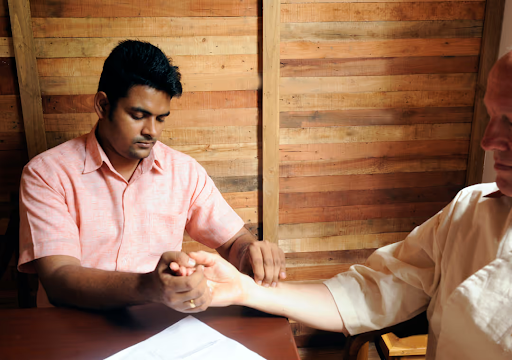
A trained Ayurvedic doctor assesses your:
- Pulse
- Tongue
- Appetite and digestion
- Sleep patterns
- Stress levels
- Energy variation
- Medical history
- Body constitution
This clinical assessment identifies which dosha is aggravated and whether Ama is present.
In many structured Ayurveda settings, patients may complete a health questionnaire before consultation to provide background information. However, diagnosis in Ayurveda is confirmed through direct consultation and personal examination by a trained doctor.
2. Preparation and Detoxification
Once an imbalance is identified, treatment begins step-by-step, in stages.
First comes preparation. This may include:
- Specific dietary adjustments
- Herbal preparations
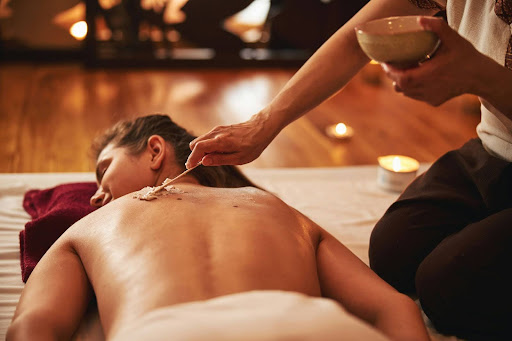
- Oil applications to loosen accumulated waste
If needed, a classical detox process called Panchakarma is introduced. It is a structured cleansing method that includes:
- Oleation (internal and external oiling)
- Steam therapy
- Controlled elimination therapies
- Gradual recovery and diet stabilisation
This is not a fast cleanse. It is a medically supervised process traditionally carried out over 14–21 days.
Ayurveda does not aim for sudden, dramatic results. It restores dosha balance by strengthening digestion and metabolic stability step by step.
3. Rebuilding and Daily Regulation
After cleansing, the attention turns to rebuilding and regulation.
You are guided on:
- Personalised diet suited to your constitution
- Meal timing
- Daily routines (Dinacharya)
- Sleep hygiene
- Stress management
- Seasonal adjustments
Ayurveda places strong importance on rhythm. Irregular routines disturb dosha balance, while consistent habits stabilise it.
So, without lifestyle correction, imbalance may return. This is why it’s often said that Ayurveda extends beyond treatment rooms.
Is Ayurveda Scientifically Supported?
Ayurveda developed long before modern clinical trials. However, research has begun examining its practices.
Studies have shown:
- Certain herbal formulations may support digestion and inflammation balance
- Oil massage therapies can reduce stress markers
- Structured Panchakarma programmes may improve metabolic indicators
At the same time, Ayurveda is not a replacement for modern emergency medicine. It functions best as a regulated system focused on prevention, chronic imbalance, and metabolic health.
In Sri Lanka and India, Ayurvedic medicine is formally recognised and regulated within national healthcare frameworks. Its effectiveness depends greatly on proper diagnosis and supervision.
Is Ayurvedic Treatment Safe?
When practised by qualified professionals, Ayurveda is considered safe.
Risks typically arise when:
- Individuals self-prescribe herbs
- Detox procedures are attempted without supervision
- Programmes are shortened or modified improperly
During detox, mild temporary reactions may occur:
- Fatigue
- Changes in bowel habits
- Mild headaches
When treatment is personalised and monitored, these responses are short-lived and manageable.
How Long Does Ayurveda Take to Work?
The timeline depends on the depth of imbalance.
Mild stress-related concerns may improve within several days. However, long-standing digestive or metabolic conditions usually need two to three weeks of structured care.
As we mentioned above, Ayurveda works progressively. It restores digestive strength first. It then stabilises energy, sleep, and clarity. The aim here is a steady balance rather than temporary suppression of symptoms.
Why Sri Lanka is Known for Ayurveda
Sri Lanka is widely recognised as one of the strongest centres for traditional Ayurvedic medicine outside India. Unlike many countries where Ayurveda is practised mainly in private wellness centres, Sri Lanka has preserved it as part of its national healthcare tradition.
Ayurvedic hospitals, state training institutions, and licensed practitioners operate under regulatory oversight guided by the Ayurveda Act of Sri Lanka. This framework helps ensure that diagnosis, treatment protocols, and practitioner training follow recognised standards.
Ayurveda is a Living Medical Tradition in Sri Lanka
Ayurveda in Sri Lanka is not a recent wellness trend. It has been practised for generations and continues to be passed down through formal education and clinical training.
Many of the medicinal plants used in treatment grow locally. Fresh leaves, roots, and herbs are prepared according to classical formulations on the island. The tropical climate also supports circulation and better oil absorption during external therapies, increasing the effectiveness of certain treatments.
This combination of regulation, training, and environmental conditions has made the country a trusted destination for those seeking structured Ayurvedic treatment in Sri Lanka under qualified supervision.
Ayurveda Retreats in Sri Lanka
Sri Lanka has become known for structured, doctor-led Ayurveda retreats rather than short spa-style stays. Many international guests travel here seeking supervised detox programmes rooted in traditional medical practice.
At Ayurvie Weligama, we follow this clinical approach carefully.
Serious Ayurvedic programmes are not built around relaxation alone. They begin with a medical consultation and proceed step by step.
Each programme at our wellness retreat in Sri Lanka begins with a detailed consultation with a resident Ayurvedic doctor. Body constitution, current imbalance, digestion, sleep, and medical history are assessed before treatment starts.
Based on this evaluation, treatment may include:
- Personalised herbal prescriptions
- Therapeutic oil applications and massage
- Steam therapy, where indicated
- Prescribed Ayurvedic meals
- Daily monitoring and adjustment
- Structured Panchakarma detox for deeper cleansing
Our programmes are designed to restore dosha balance through metabolic reset, stress regulation, digestive support, and lifestyle correction. Some guests stay for short Ayurveda detox plans. Others complete a 14-to-21-day Panchakarma programme under supervision.
Although our retreat is set along the southern coast, the focus remains medical. Rest supports recovery, but diagnosis and sequencing guide every step here.
Considering a Doctor-Led Ayurveda Programme?
Ayurveda works by identifying your individual constitution, strengthening digestion and metabolism, clearing accumulated metabolic waste gradually, and restoring daily rhythm.
It is a structured medical system built on observation, diet regulation, detoxification, and long-term lifestyle correction. When practised under supervision, it supports the body’s natural ability to rebalance.
If you are considering experiencing Ayurveda in practice, medical guidance and continuity of care are essential. At Ayurvie Weligama, we begin your treatment with consultation and follow traditional sequencing under resident doctors, whether for shorter stress-support stays or longer Panchakarma plans.
Choosing a supervised setting ensures that Ayurveda is applied safely and according to your individual needs.
Blog
Related Articles